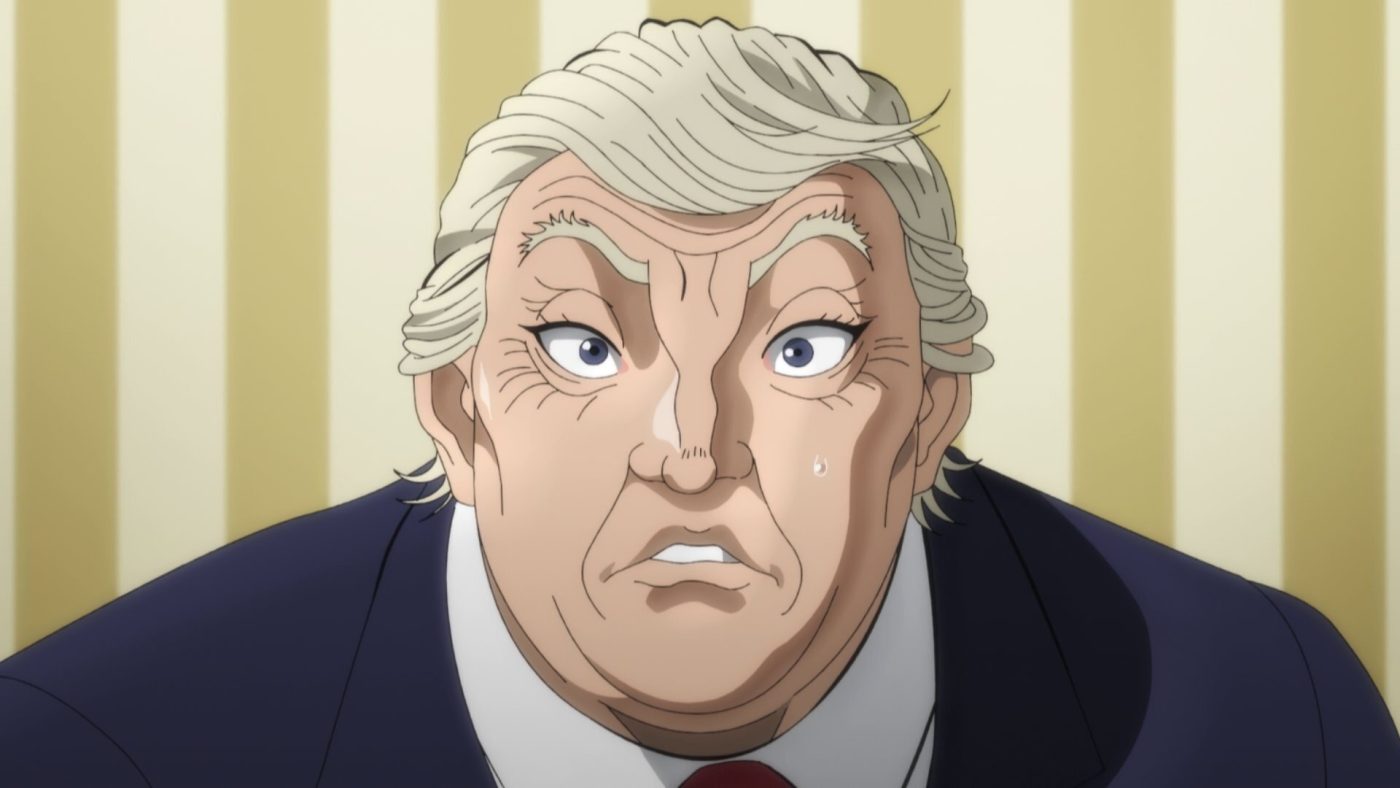

When the world’s most controversial former president meets the “Strongest Creature on Earth“, the boundaries of political satire and artistic licence are pushed to their absolute limits.
Here’s the full scene of Donald Trump meeting Yujiro Hanma pic.twitter.com/kcCQyxmXDK
— Trent (@Woodlandbuckle) June 19, 2026
The Viral Moment
“Here’s the full scene of Donald Trump meeting Yujiro Hanma.”
A Clash of Tropes and Traditions
Whilst American audiences have reacted with a mixture of outrage and disbelief, Japanese netizens have responded with characteristic amusement. The trope of world leaders submitting to Yujiro is well-established within the manga’s lore; indeed, the Japanese Prime Minister has previously been shown declaring defeat to Hanma. It is a narrative device designed to elevate Yujiro above the level of mere mortal fighters, positioning him as an entity that transcends national boundaries and political power.
Nevertheless, the adaptation has not been without its controversies, even among domestic viewers. Keen-eyed fans noted that the animators altered the President’s arm gesture from the original manga. The original pose drew uncomfortable parallels to a Nazi salute, a modification that was likely a deliberate calibration to avoid severe international backlash. Yet, the inclusion of the incontinence has reignited debates over the limits of parody and the respect afforded to real-world political figures.
Copyright, Satire, and the South Park Precedent
The discourse surrounding the scene is multifaceted. Some commentators have pointed out the hypocrisy of those crying foul, noting that Western animated programmes such as South Park have previously depicted political figures in far more absurd and compromising scenarios. Conversely, others have raised legitimate concerns regarding portrait rights and intellectual property, especially given the fraught history of political figures misappropriating anime imagery without permission.
There is also a fierce debate regarding authorial intent. Is this the brainchild of the original creator, Keisuke Itagaki, or a politically motivated insertion by the animation staff? The distinction is crucial for fans attempting to reconcile the scene with the overarching narrative. Regardless of its origin, the sequence has undeniably achieved its primary goal: it has captured global attention.
As the dust settles on this transatlantic cultural clash, one must ponder the evolving nature of political satire in an increasingly globalised media landscape. Does the use of a real, living political figure in a foreign animated medium cross a line of decency, or is it a testament to the boundless freedom of artistic expression?



Leave a Comment