

Hideaki Anno built a machine that eats its young. Thirty years out, the consensus holds: Neon Genesis Evangelion doesn’t merely depict pain—it engineers it with surgical precision, denying five specific characters the closure their arcs demand. This isn’t thematic necessity. It’s authorial choice, and the receipts are brutal.
The Setup – Adults Who Fail Upward Into Oblivion
Misato Katsuragi dies bleeding out, convinced she failed the boy she tried to mother. Her final act—forcing a kiss on a traumatized child—reads less as redemption than as Anno’s indictment of broken people replicating their damage. The “adult kiss” framing fans once romanticized collapses under scrutiny: it’s a boundary violation from a woman who never learned healthy connection. She doesn’t get to save Shinji. She doesn’t get to live. She gets a hallway and regret.
Ryoji Kaji fares worse. Off-screen death by anonymous gunfire. No witness, no meaning, no reunion with the family he was building. Even Rebuild keeps him stranded—alive, technically, but severed from Misato and their son by narrative geography. Anno grants him information (he cracks Instrumentality) but withholds impact. The only functional adult in the cast becomes footnote.

The Spiral – Children as Sacrificial Fuel
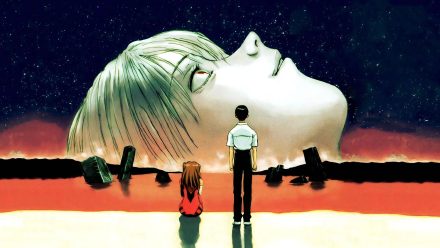
Asuka Langley Soryu’s arc operates like a trapdoor. Her identity collapses when piloting fails; her recovery arrives just in time for the Mass Production EVAs to literally tear her apart. The timing is designed to hurt—her regained will to live makes the mutilation register harder. This isn’t tragedy as consequence. It’s cruelty as architecture.
Toji Suzuhara proves proximity to Shinji Ikari is fatal. Selected, possessed, mutilated, discarded. Bardiel’s possession of EVA-03 exists to force Shinji’s hand through Dummy Plug deployment, making Toji’s body a prop in another character’s breakdown. He survives (minus limb) but vanishes from relevance, his suffering reduced to fuel for Shinji’s guilt. The narrative extracts maximum trauma from minimum screen time.
The Absence – Erasure as Final Form
Yui Ikari’s fate distills the series’ logic. She doesn’t die; she diffuses—trapped in EVA-01’s core, memory fragmented across Rei clones, consciousness stretched into something post-human. Her “success” in protecting Shinji requires abandoning human form entirely. Anno presents this as maternal sacrifice elevated to transcendence. Read closely: it’s annihilation dressed as apotheosis. She wanted to live. She got orbit.

The Mechanism Revealed
Anno’s structure requires these outcomes to maintain its thesis—that connection is possible but excruciating, that growth arrives wounded. The question isn’t whether this works aesthetically. It manifestly does. The question is whether the same impact required this specific distribution of hopelessness.
Misato couldn’t survive to see Shinji choose differently? Kaji couldn’t witness his child? Asuka couldn’t pilot again?
The cruelty feels selected rather than inevitable—choices calibrated for maximum emotional extraction rather than thematic coherence alone.
If Shinji received his beach reunion with Asuka, if Misato’s kiss led to survival, if Kaji’s gunshot missed—would Instrumentality’s horror land softer, or would the earned warmth make the collapse cut deeper?







Leave a Comment