

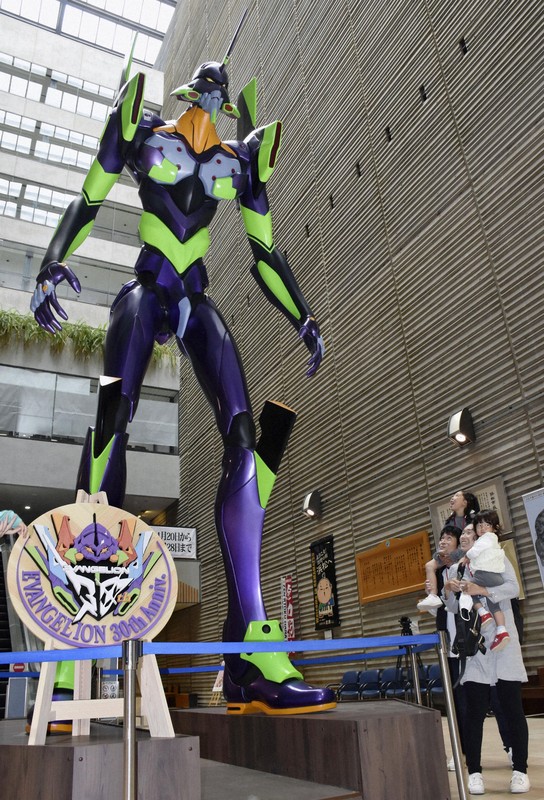
The city of Hamamatsu spent 52 million yen on a six-metre statue of Unit-01 from Neon Genesis Evangelion. The return? Over 1.1 billion yen in economic impact. That’s a twenty-one-fold return on investment.
51,800 visitors made the pilgrimage. They weren’t all locals:
- Americans
- Brazilians
- French
- Germans
- Chinese
People travelled considerable distances to stand before a giant fibreglass robot.
Why This Location Made Sense
Hamamatsu served as the visual reference for “Village-3”—the survivor settlement in Evangelion: 3.0+1.0 Thrice Upon a Time. Location scouts from Khara spent time in the city. Local officials recognised the association as an asset, not a curio.
The Ripple Effects
Visitors didn’t just photograph and leave. They ignored local car parks Local car parks went largely unused because people preferred walking through the city centre. Collaborative food menus at nearby restaurants pulled in roughly 8 million yen on their own.
Otaku tourism isn’t niche—it’s just under-monetised by institutions too polite or embarrassed to lean into it.
The Process Worth Noting
- Identified an authentic connection to a globally recognised property
- Invested in a physical landmark at a sensible price point
- Trusted the audience to do the rest
No augmented reality apps. No bewildering cross-platform campaigns. Just a big statue of a robot in a place that mattered.
If a statue tied to a decades-old anime franchise can outperform traditional tourism investments by that margin, what are cultural ministries spending their budgets on instead?
Does this success depend on the authenticity of the geographic connection, or could any jurisdiction with enough square footage replicate the trick?








Leave a Comment