

The Exhausting Performance of Perfection
We live in a time where pretending to be impeccable in front of others is almost a requirement to survive daily social life. We spend so much energy curating the version of ourselves we present to the world—polished, polite, impeccable. It’s a performance most of us keep up in public, then quietly retire the second we’re through our own front door. Now imagine doing that twenty-four hours a day, seven days a week. The mental load alone would end up tiring absolutely anyone.
‧ ┈ ‧ ┈ ‧ ┈ ‧ ୨୧ ‧ ┈ ‧ ┈ ‧ ┈ ‧
『#恋せよまやかし天使ども』
⠀ *•. 2027年TVアニメ化.•*‧ ┈ ‧ ┈ ‧ ┈ ‧ ┈ ‧ ┈ ‧ ┈ ‧ ┈ ‧
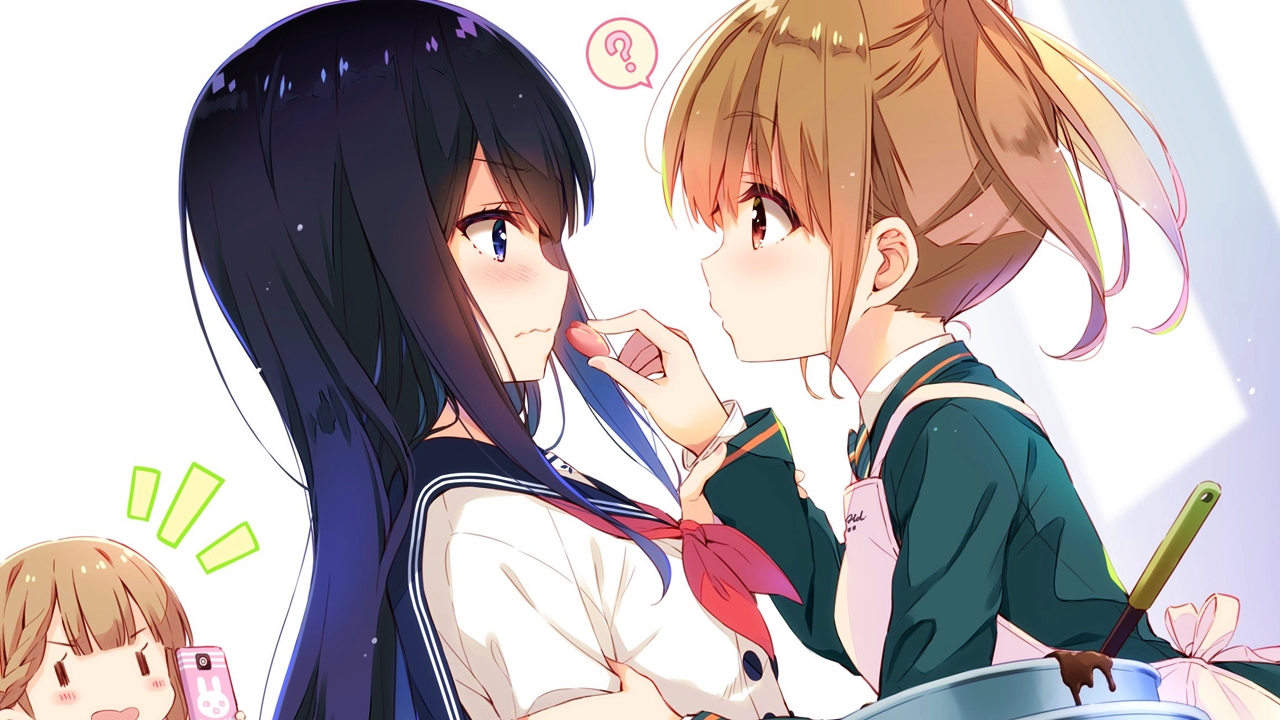
アニメ化を記念して #卯月ココ 先生
描き下ろしイラストが到着!続報は近日公開🏹 pic.twitter.com/O0evzh9r5o
— TVアニメ『恋せよまやかし天使ども』 (@koidomo_anime) June 11, 2026
Fall in Love, You False Angels — Anime Confirmed for 2027
That clever, deceptively sharp core is exactly what drives Koiseyo Mayakashi Tenshi-domo, or Fall in Love, You False Angels, which has just officially confirmed its animated production with a premiere scheduled for the year 2027. The news broke not with a whimper but a well-timed placement—announced on Thursday, June 11, through the promotional banner of the seventh compiled volume of the manga in Japan, accompanied by a commemorative illustration from creator Coco Uzuki and the immediate launch of an official project social account to share the news of the project.
Details on the voice cast and the technical team in charge of animation are still under wraps, but that has hardly dampened the enthusiasm. This is a series that has already built a formidable reputation on the page, generating quite a bit of noise due to the great success of its source material.
Why It Connects With Readers
The story has managed to win over readers thanks to its ingenious way of approaching adolescent relationships, moving away from flat archetypes common to school romance to offer a dynamic of “accomplices” that completely refreshes the usual formulas of romance. It’s the narrative equivalent of two character designers building complementary visual language—the public persona a soft-focus shoujo close-up, the private self a sharply inked, expressive panel. It taps into a specific, modern anxiety about the sustainability of personal branding.
Awards and Recognition
Its great reception in the market is backed by important awards. The manga won the Kodansha Manga Award in 2025, with nominations for the Shogakukan Manga Award and consistent consecutive placement in the top 20 of the famous guide Kono Manga ga Sugoi! for the female audience. That’s the kind of triple-crown validation that signals more than just popularity—it points to genuinely resonant work.
About Fall in Love, You False Angels
For those who spend their time accumulating volumes on their to-do list without reading anything—believe me, you are missing something good—this work began its serialization in April 2023 within the magazine Dessert from the Kodansha publishing house. The plot follows the steps of Otogi Katsura, the president of the first-year high school class, known by everyone as a sweet, polite and perfect girl. However, behind that saintly façade hides an extremely frank, rude and unfiltered personality, willing to put anyone in their place when the situation requires it.
Her secret is in danger the day she confronts some annoying kids at the train station and is discovered by Toki Ninomae, the quiet and supposedly impeccable school vice president. To Otogi’s surprise, Toki not only enjoys seeing her aggressive side, but he himself hides a very different side than the one he shows in the classroom. He’s fascinated. Because he, too, has a meticulously maintained façade of his own.
Thus, both end up agreeing to an alliance to protect their true personalities from the rest of the school—a deal that will inevitably force them to become extremely close both in public and private. This isn’t just a plot device; it’s a mutually assured destruction pact that forces genuine intimacy. Their subsequent alliance to protect each other’s secrets builds a relationship on the thrill of shared secrecy rather than sudden, public confessions.
With these types of stories where the protagonists have a double life, what is the more compelling tension?
- The quiet, charged thrill of maintaining the secret—a private world only the protagonists share, keeping the mystery and their secrets intact in front of the rest of the students?
- The inevitable, chaotic fallout—when the carefully constructed image finally shatters in front of everyone, when the entire school discovers the truth?
One keeps the conflict internal and intimate; the other makes it spectacularly public. One builds tension through restraint; the other through explosive revelation.
And following that—what does it say about us, as readers or viewers, when a narrative about the exhausting need for perfection becomes a hit? Are we seeking escapism from that very pressure, or do we simply find comfort in seeing it reflected, and ultimately unraveled, on screen?






Leave a Comment