
The Trailer That Changed Everything
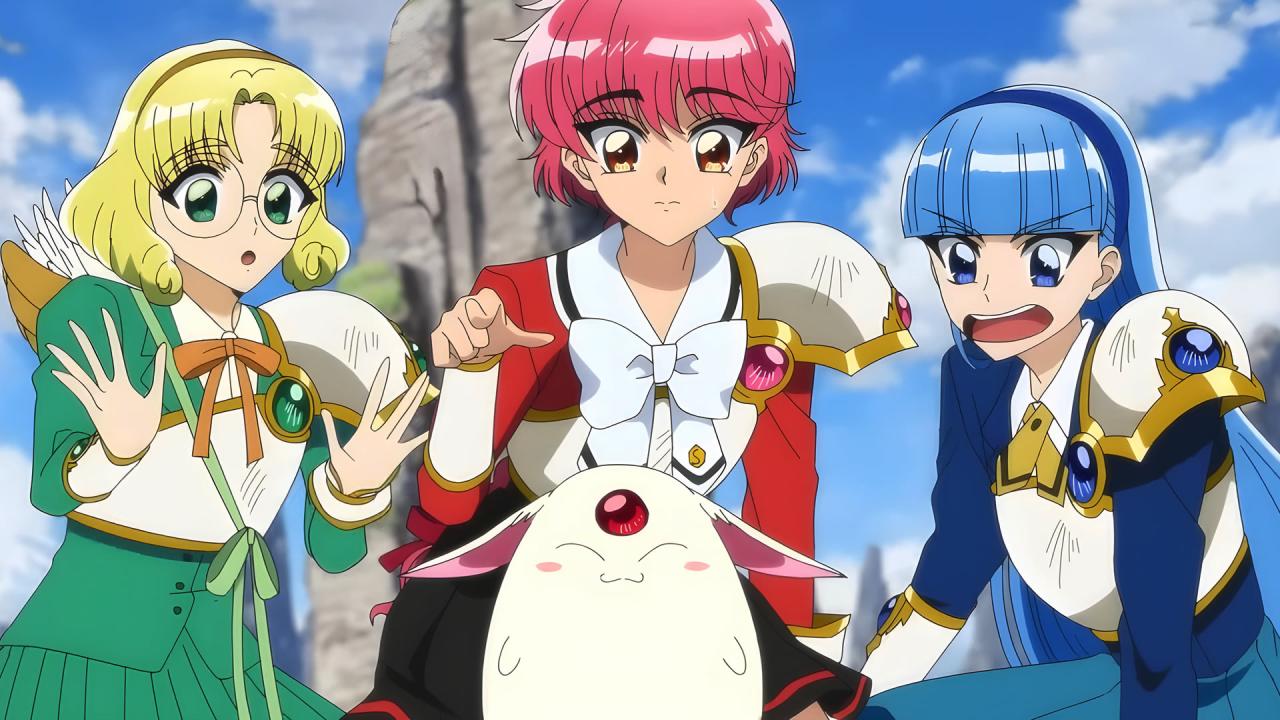
Nostalgia hit full force during this weekend’s Anime Expo panels. The production committee behind the ambitious new animated adaptation of Magic Knight Rayearth — legendarily known in our region as The Magical Warriors — released a brutal trailer that finally lets us see the final visual work. This isn’t a nostalgic cash-grab. It’s a statement of intent.
The trailer didn’t just drop — it landed with the deliberate weight of a calculated move. It served to show off the redesign of the protagonists and marked as the immovable date for its debut on Japanese television, occupying the coveted nightly block “IMAnimation W” on the TV Asahi network.
Rebuilding an Icon for a New Era
Bringing back a mainstay from the ’90s requires a team that understands the material, and the facilities of E&H Production seem to be up to par. The project marks the grand debut of Yui Miura in the main director’s chair, supported by the experience of Shigeru Murakoshi, who carries the heavy job of structuring and modernizing the series’ scripts.
Appointing Miura as director with Murakoshi on scripts suggests an understanding that this material needs more than a facelift. The isekai premise Hikaru and her friends pioneered in now operates in a saturated market. Murakoshi’s job is to modernize the narrative engine without stripping the gears — less about flashy new mechanics and more about ensuring the old ones run with purposeful efficiency for today’s viewer.
In the visual section, Satomi Watabe takes over the character design, trying to balance modern aesthetics with unmistakable classic lines. Her designs aren’t merely a fresh coat of paint. It’s a negotiation between two eras. She has to honor the iconic, flowing lines of CLAMP‘s original while speaking the sleeker, more immediate dialect of contemporary animation. It’s a high-wire act — lean too far toward nostalgia and it feels dated, too far toward modernity and it loses its soul.
However, the producer’s master move — UNLIMITED PRODUCE by TMS — was to put together a luxury trident for the original soundtrack.
The Voices Behind the Warriors
The casting follows a precise, deliberate logic. Picking these specific actresses isn’t just star power — it’s a direct bridge. Each one is intrinsically linked to a modern, defining role for a generation of viewers. They’re not just voicing characters; they’re transferring emotional equity — a strategy to make the Magical Warriors
feel immediately familiar to an audience that never saw the original broadcast.
- Ayane Sakura (Ochaco Uraraka in My Hero Academia) as Hikaru Shidō
- Rumi Okubo (Astolfo in Fate/Apocrypha) as Umi Ryūzaki
- Rie Takahashi (Megumin in KonoSuba) as Fū Hōōji
- Yūki Kaji (Eren Yeager in Attack on Titan) as Clef
- Emiri Katō (Kyuubey in Puella Magi Madoka Magica) as Presea
- Yoshitsugu Matsuoka (Kirito in Sword Art Online) as Ferio
- Saori Hayami (Yor Forger in Spy × Family) as Emeraude
- Yūki Ono (Taiga Kagami in Kuroko’s Basketball) as Zagato
- Mika Kikuchi (Mokona in Tsubasa Reservoir Chronicle) as Mokona
The Music Question
Adding Yuki Kajiura alongside Takumi Ozawa and Shiho Terada to orchestrate the music for this fantasy is a significant, bold move. Kajiura’s work on Madoka Magica and Sword Art Online defines a certain kind of high-stakes, mythic fantasy sound. This is a tripartite composition team.
The goal isn’t to replicate the soundtrack — it’s to create a new auditory architecture that can support the same emotional weight with contemporary tools. Whether it surpasses the original is the wrong question. The real question is whether it can establish its own identity while feeling inevitable.
The CLAMP Legacy
For new generations who did not experience the original phenomenon, it is crucial to understand that this work laid very important foundations for the genre of modern isekai. Created by the unrivaled collective of artists CLAMP, the original manga was serialized in the pages of Nakayoshi between and .
Its premise takes us directly to a school trip to Tokyo Tower, where Hikaru, Umi, and Fū are suddenly dragged into the fantastic world of Cephiro. There they discover they were summoned to become Magical Warriors and save the pillar of that universe, Princess Emeraude, from the clutches of the priest Zagato.
The original franchise exploded worldwide thanks to its first anime broadcast between and , followed by a brutal reinterpretation in OVA format in .
Understanding Magic Knight Rayearth is to understand a blueprint for the modern isekai boom — not as a trope-filled adventure, but as a nakige (a story designed to make you cry) wrapped in fantasy armor. It prioritized emotional resonance and sacrifice long before that became a common market strategy.
What This Really Means
We have a production committee that seems to have studied the assignment. They’re leveraging star power for instant connection, investing in a directorial team that can bridge generational storytelling, and making a bold, strategic play with the music. Every piece on this board was placed with intent.
This leaves us with a couple of points to consider:
- With a legacy this embedded in fan memory, does the very act of “modernizing” its aesthetic and tone inherently change the story’s fundamental character? At what point does adaptation become alteration?
- Is the calculated use of recognizable voice actors a brilliant bridge to the past, or does it risk anchoring these classic characters too firmly to their modern counterparts in the audience’s mind?
One thing is certain — can’t come soon enough.





Leave a Comment