

On , a legal chapter that has haunted Japan for nearly seven years quietly drew to a close. The Osaka High Court confirmed what many considered inevitable: Shinji Aoba’s death sentence stands, his appeal withdrawn by his own hand. No further avenues remain. The gavel has fallen for the last time.
How we arrived here
The mechanics reveal something curious about human nature under extreme pressure. In , the Kyoto District Court handed down capital punishment, finding Aoba fully cognisant of his actions. His defence team filed the expected appeal—standard procedure.
But then something unusual occurred.
In , Aoba himself dispatched a document from his cell requesting the entire process halt. His reasoning was stark:
The gravity of his crimes merited death, and he wished to expedite proceedings rather than prolong them.
One might call it an admission of guilt. Others might see something more complicated at work.
The defence’s final attempt
Aoba’s legal team certainly saw complexity. They petitioned the Osaka Court to disregard their client’s wishes, arguing:
- The request emerged suddenly
- His mental health difficulties—including the delusions that fuelled the attack—compromised his capacity for rational decision-making
They essentially asked the judiciary to save a man who no longer wished to be saved.
The court wasn’t persuaded. Presiding Judge Hisashi Ito determined that Aoba comprehended precisely what withdrawing his appeal meant. Whatever psychological struggles existed, they did not obscure the defendant’s understanding of this particular choice.
The massacre
On , Aoba doused Kyoto Animation’s Studio 1 in petrol and ignited it.
- Thirty-six artists—individuals who had dedicated their lives to creating works of genuine beauty—perished
- Thirty-two others bore injuries
The motivation? A patently false conviction that the studio had plagiarised a novel he had written. A phantom grievance A delusion leading to very real bodies.
What remains
No sentence restores what was lost.
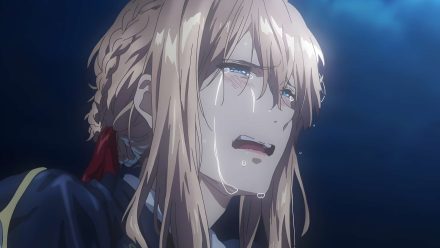
The families who gathered evidence and testimonies, the survivors who rebuilt shattered bodies and careers, the global community that cherished works like A Silent Voice and Violet Evergarden—none receive restitution through legal pronouncement.
What they do receive, perhaps, is the cessation of noise. The knowledge that the earliest possible date for execution approaches without interruption.
There is something quietly remarkable about a man who, after insisting upon his grievance so violently, ultimately accepts that the legal system reached the correct conclusion. Whether one views it as conscience emerging through pathology, or simply the exhausted clarity of someone who finally ran out of road, remains an open question.
The Japanese legal system has now completed its work. Whether the wider questions receive the attention they merit is another matter entirely:
- Does Aoba’s withdrawal of appeal represent genuine accountability, or merely the final gesture of a mind that had already destroyed itself?
- What responsibility do societies bear for identifying and intervening in pathological fixations before they become catastrophic?
- And for those who lost loved ones at Kyoto Animation, will legal finality genuinely bring peace, or does closure prove as illusory as the plagiarism claim that started it all?





Leave a Comment