

Human behavior rarely operates without a script. We look for patterns, for narratives that make sense of our own internal chaos—and occasionally, we latch onto the wrong ones.
On , a profound tragedy unfolded at Ayser Çalık High School in Türkiye’s Kahramanmaraş province. A 14-year-old student, İsa Aras Mersinli, carried out an armed attack that left multiple victims injured before being apprehended by school staff and a parent. Mersinli subsequently died from his injuries.
It is already recorded as the most severe school shooting in the country’s history.
The Manifesto
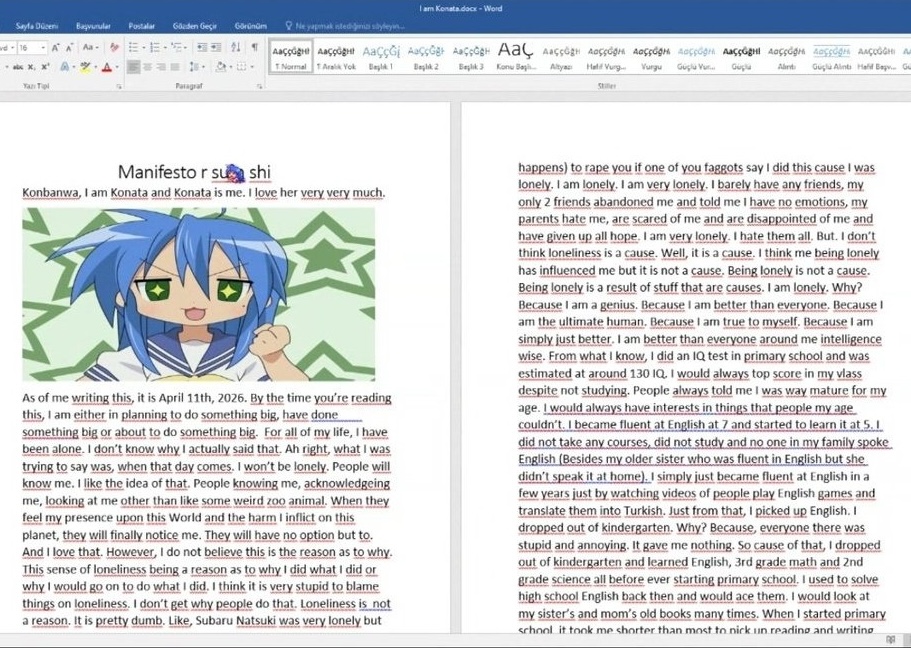
During their investigation, Turkish authorities unearthed a manifesto penned in English and dated . The document reveals a glaring cognitive dissonance:
- Mersinli boasts of a high IQ and dismisses his peers as entirely beneath him
- He vehemently denies that his actions stem from loneliness
- Yet he dedicates paragraphs to cataloguing his crushing isolation, family rejection, and inability to connect with another living soul
It’s the oldest contradiction in the book: the superiority complex walking hand-in-hand with the bottomless pit of alienation. You don’t write a manifesto if you truly don’t care.
The Cultural Script
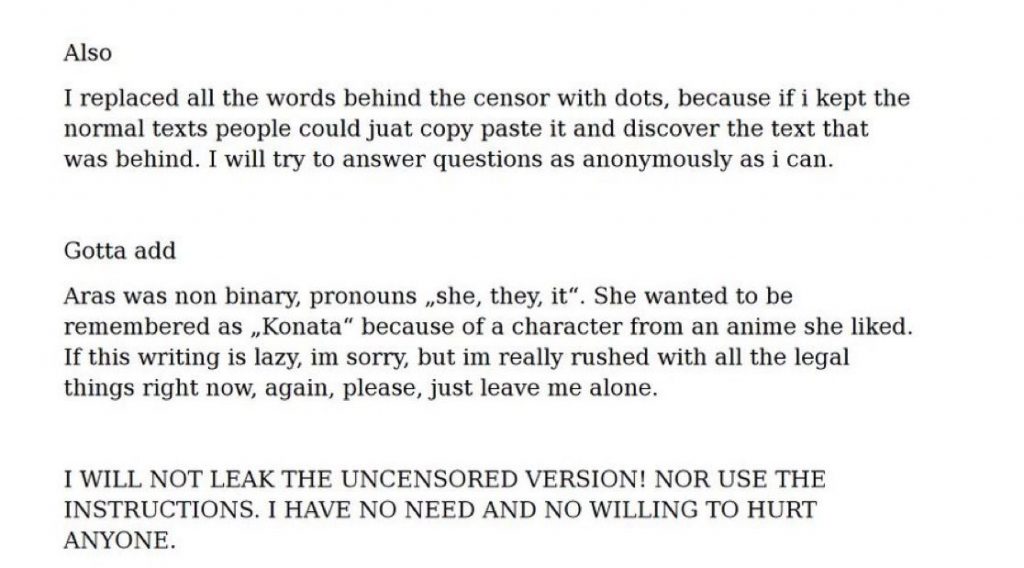
Scrawled within the text was a striking admission:
“Just like Natsuki Subaru, I also felt very lonely.”
For the uninitiated, Natsuki Subaru is the protagonist of Re:Zero, a popular isekai anime. Subaru begins his arc as a hikikomori—a shut-in who has entirely withdrawn from society. Investigators also noted that Mersinli’s computer wallpaper featured Konata from Lucky Star, another character deeply intertwined with otaku subculture and reclusive tendencies.
What the Internet Misses
The internet inevitably leaps to causation. But no credible expert or official report implies that Japanese animation caused this attack. That would be a spectacularly lazy read.
Mersinli wasn’t radicalised by a cartoon; he was validated by it.
When a young mind experiences such profound severance from reality, it doesn’t invent a new vocabulary for pain. It borrows one. It seeks avatars—characters framed by the edges of a screen—that reflect the internal narrative of rejection. The fiction didn’t build the isolation; it merely provided the interior decor for a room the real world had already locked him inside.
The Uncomfortable Questions
As Turkish authorities continue their investigation as of , we are left with a chilling behavioural blueprint. A kid who felt invisible in reality mapped his identity onto the tragically visible pain of a fictional character.
- When we dismiss a teenager’s withdrawal as mere adolescent angst, are we missing the vital pivot point where isolation becomes identity?
- If young people are increasingly turning to fictional narratives to articulate their very real psychological distress, what kind of stories are we allowing them to find?









Leave a Comment