

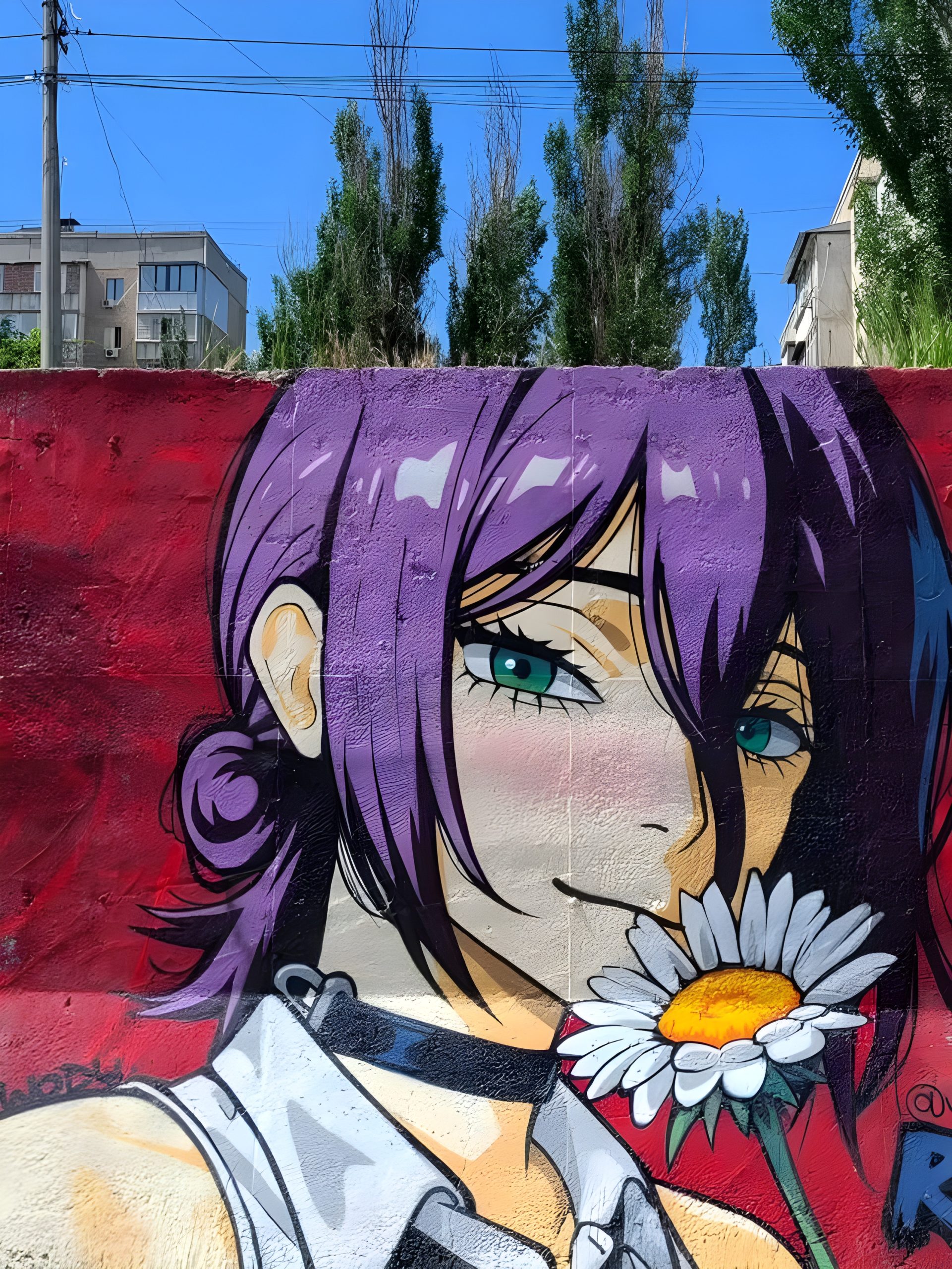
It seemed like we couldn’t have nice things. A few weeks ago, the streets of Bishkek, the capital of Kyrgyzstan, had been adorned with authentic works of street art: giant murals by Reze of Chainsaw Man and the ancient elf of Frieren: Beyond Journey’s End.
The person responsible for this tremendous work was the urban artist Wodyone, who invested countless hours with the sole objective of giving a bit of otaku culture to passersby.
So, you think ruining someone’s work makes you tough? The recent saga from Bishkek, Kyrgyzstan, paints a different picture.
The Vandalism
Predictably, the moment the murals gained online traction in mid-May, they attracted the mundane malice of black spray paint. Some cowards decided it was a good idea to ruin them, covering the faces of both protagonists with meaningless scribbles. They did their work swiftly.
It’s a pattern as old as public art: creation invites destruction.
An Admirable Response to Destruction
Seeing your work destroyed in record time is enough to make anyone want to give up completely. Wodyone confessed to feeling quite disheartened to think that many local fans did not even have the opportunity to admire the murals in person before the attack.
Although wear and tear from weather and the passage of time is something street artists deal with every day, this level of premeditated damage was a very low blow.
The artist’s initial disappointment—understandable, as fans hadn’t even seen the originals—was met not with silence, but a global roar.
What these vandals never expected was for the global anime community to unite in a huge wave of support, filling the illustrator’s networks with messages of encouragement from all corners of the planet. This wasn’t just noise; it was a collective refusal to let petty acts have the last word.
The Triumphant Return of the Bomb Girl
Motivated by all this immense positive energy, the artist demonstrated enviable perseverance. Instead of letting the black spots stay there forever dirtying his vision, he took out his tools and managed to restore the mural of Reze to its former vibrant glory.
Through a message on his official profiles, the young man thanked the tremendous noise that the community made, confessing that the massive indignation pleasantly surprised him and gave him the necessary strength not to leave things like that.
He promised his followers that he will soon get to work to also recover the Frieren mural.
The vandal’s legacy is now a footnote in a better story: one where the response to destruction is simply more creation, fuelled by a community that recognised the value of what was attacked.
The Sharp Lesson
The damage was petty. The motivation? Likely jealousy or sheer boredom. The response? Substantial, widespread, and deeply human.
Watching a malicious act turn into a total victory for anime fans restores a little faith in humanity. The artist’s perseverance, amplified by thousands of unseen voices, turned a loss into a reaffirmation.
A Few Things to Consider
- When public art exists in a legal grey area, does its growing value as a community touchstone demand a different kind of protection?
- Could the swift, passionate defence of such works online now serve as a more effective deterrent than any physical barrier?
- In an age of digital replication, what does the unique, physical presence of a mural add to a community that a screen never can?






Leave a Comment