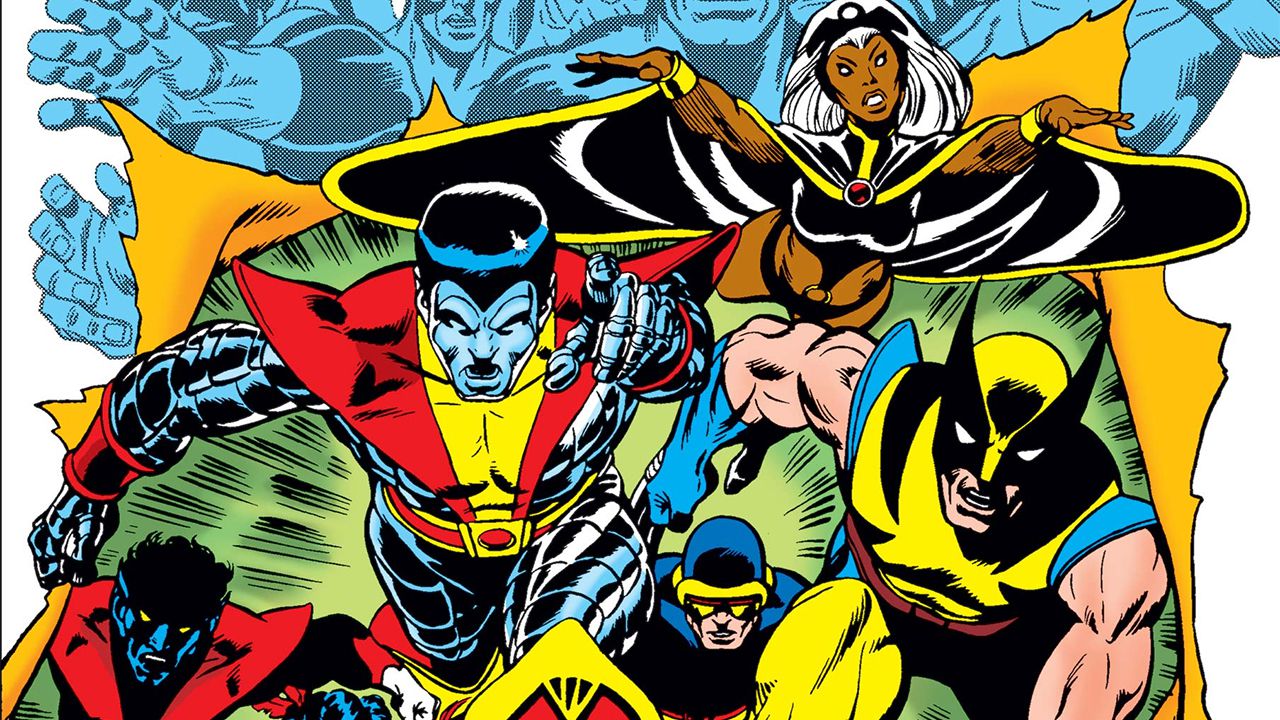

The X-Men have represented for years The most popular superhero group from Marvel Comics. Before the arrival of Marvel Studios and the Avengers movies, it was the X-Men who kickstarted sales of the House of Ideas comics. Among the numerous stories worth reading We identified five not to be missed.
Before we begin, one premise is in order: to say that the X-Men stories selected are the best of all time would be wrong. Since it is always a question of personal preferences, there can be no objective rankings. What we are suggesting, however the stories we believe are the most significant in X-Men history, both for what is being told and for what they represent in the mutant canon of Marvel Comics.
Giant size X-Men
Giant size X-Men # 1 debuted for the first time the most iconic group of X-Men: those formed by Wolverine, Storm, Colossus, Nightcrawler, Burning Sun, Thunderbird and Banshee. These new X-Men replace the first historical group consisting of Marvel Girl (Jean Gray), Beast, Angel, Cyclops and the Ice Man. Giant-Size X-Men is essential to lay the foundation for Mutant, run by Chris Claremont, which lasted 17 years and was considered essential in the history of the X-Men.
Black phoenix saga
The Black Phoenix Saga or Dark Phoenix Saga is a story arc that is told about Uncanny X-Men from issue # 129. Written by Claremont and drawn by John Byrne, it’s about a fundamental piece in the history of the X-Men. The Black Phoenix saga debuts the Phoenix Force, which will take possession of the body of Jean Gray as the story progresses. Marvel girl, now the black phoenix will decide to sacrifice himself to save his fellow X-Men. The story was not only repeated countless times in the comics, but was also adapted twice in the cinema (very loosely): in X-Men 3 and X-Men: Dark Phoenix.
Days of a future past
Days of future past, also part of Claremont and Byrne’s run, is a storyline published in Uncanny X-Men # 141 and # 142, 1981. This story takes place in a dystopian future and sees an America under the command of the Sentinels. All mutants were locked up in concentration camps and the nuclear holocaust seems inevitable. The X-Men manage to send Kitty Pride back to the present in an attempt to avoid the murder of Robert Kelly, a murder that was set in motion the series of events that led to the creation of the dystopian future. Obviously, the movie X-Men Days of Future Past is based on this story, a movie that has a few differences from the original comic.
God loves, man kills
God Loves, Man Kills was published in 1982 and is a graphic novel by Chris Claremont and Brent Anderson in which the basic theme is that of racism. Since its inception, the X-Men have always represented a minority in the Marvel world, much like blacks or homosexuals. In God loves, man kills, racism, intolerance and fear of the other form the basis of a story that despite its publication almost forty years ago it remains surprisingly relevant.
House of X / Powers of X
While Claremont has dominated this selection of stories, it would be unfair not to mention Jonathan Hickman’s run, which is titled House of X and Powers of X, revived the X-Men stories from 2019 after a not particularly imaginative time. Hickman forged a solid fabric while doing a world building job that revolutionized the mutated mythology, always keeping an eye on the past. While the Destiny of X announcement seems to represent the end of Hickman’s mutant run, the world of the X-Men has changed forever.
Outside of the comics, after Disney’s acquisition of Fox, there doesn’t seem to be any news about possible adaptations of the X-Men in theaters or on television. In fact, a rumor recently surfaced anticipating a new X-Men production from Marvel.







Leave a Comment