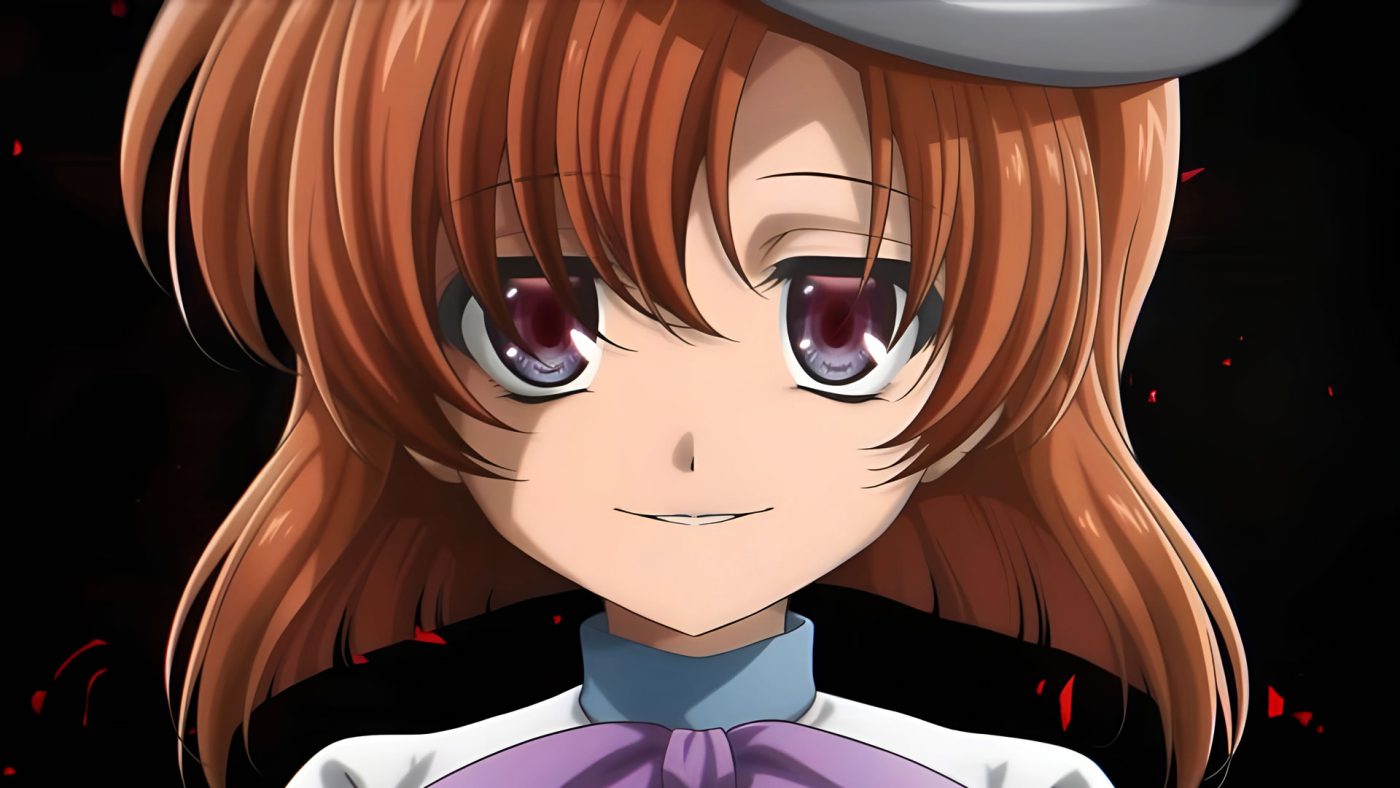

With that single phrase, Kadokawa confirmed during a special live broadcast on the 20th anniversary of Higurashi: When They Cry that a new anime of the franchise is in production. No studio, no cast, no release date—but the tagline already says enough about the intention behind the announcement: this is a comeback. The event itself was the perfect setting to revive the franchise, marking two decades since the debut of the original television adaptation.
Details such as the animation studio, creative staff, voice cast, and a release date have not yet been revealed, and that information is expected in the coming months as production progresses. What is immediately clear is that Higurashi still commands a dedicated fanbase more than twenty years after its debut, and the announcement generated instant excitement among those who have followed the series through its many adaptations across the decades.
A Calculated Return
Kadokawa’s wording—“Welcome back, everyone”
—landed with the weight of a deliberate, calculated move. No studio, no cast, no date. Just a title and a setting. That is not a vague teaser; it is a statement of intent. They are not announcing a project; they are announcing a return, and in the mechanics of franchise management, that distinction is everything. What we are seeing is a masterclass in what you might call legacy activation. The anniversary broadcast itself is the vehicle—it transforms a production update into a communal moment, leveraging two decades of accumulated audience investment. It is the equivalent of a conductor raising their baton before a note is played; the anticipation is the first movement. Kadokawa knows the history: the original 2006 anime, the influential visual novel’s nakige roots, and the more recent Gou/Sotsu cycle that proved the core mystery still had traction.
Strategic Silence
By revealing nothing about the new iteration’s form, Kadokawa has placed a very specific item on the table: the audience’s own expectations. That strategic silence is a vacuum that will be filled by fan speculation, which is itself a form of engagement. Each possible direction carries a different promise of emotional resonance—
- One path extends the complex, metatextual conversation started by Gou and Sotsu.
- The other offers a purer, distilled version of the dread and misdirection that made the franchise a landmark through its anthology-style arcs.
They have set the board without placing the pieces, which ensures every subsequent reveal will feel like a significant event. The dedicated fanbase is not just a consumer group; it is a living archive, a network of interpretation that has kept the series’ visual language and themes alive through multiple adaptations. Kadokawa’s play is to validate that investment publicly, creating a feedback loop of excitement and anticipation.
About Higurashi: When They Cry
Higurashi: When They Cry (Higurashi no Naku Koro ni) was born as a visual novel developed by 07th Expansion, with its first chapter presented at Comiket in 2002. The story takes place in a quiet rural town and follows a group of friends who become involved in a series of mysterious murders related to an annual festival. The franchise is known for its psychological horror and its distinctive structure of multiple arcs that explore different possibilities and outcomes for the same events.
The Franchise Timeline
- 2002 — First chapter of the visual novel released at Comiket by 07th Expansion
- 2006 — First anime adaptation aired with 26 episodes
- 2007 — Sequel, When They Cry II: Solutions, released
- 2020 — Franchise returned with Higurashi: When They Cry – Gou
- 2021 — Continuation with Sotsu
- 2025 — New anime confirmed in production
The Bigger Questions
The announcement raises a couple of compelling points for any observer of this medium. What does it signal when a company chooses to re-engage a legacy property not with a definitive creative vision, but with a broad, celebratory gesture first? How does the balance shift between advancing a complex, postmodern narrative—as Gou and Sotsu attempted—and honouring the original’s more straightforward, if brutal, arc structure, which is ultimately the true source of its nostalgic pull? These are the questions that will shape how the return unfolds.
What Do You Expect?
What matters most to you from this new anime: a direct continuation of Gou and Sotsu’s story, or a return to the classic structure of independent arcs that defined the original series? Either path carries the weight of twenty years of storytelling—and the answer, for now, belongs to every fan who ever whispered those words back to the screen.



Leave a Comment