

A piece of laminated cardboard the size of a beer mat is currently outperforming the S&P, inviting transnational criminal interest, and demanding better home security than the average jewelry box. Welcome to the Pokémon card market—where nostalgia stopped being a feeling and became an asset class with severe delinquency issues.
When Playgrounds Turned into Trading Floors
The numbers are doing a proper Everest impression. Card Ladder data indicates card values surged over 145% in the last year alone, with January transactions hitting $450 million. The CEO at Goldin auction house observed these pocket-sized imports have outpaced the S&P index by more than 3,000%.
When your pension fund looks sluggish next to a holographic Charizard, you know the axis of the world has tilted slightly.
And where value pools, villains follow.
The Geography of the Grab
In Graham, Washington, two men treated the security film at Next Level The Gamers Den as a minor inconvenience, netting approximately $10,000 worth of stock in under two minutes. Owner Andrew Engelbeck has watched the situation deteriorate sharply since the market went thermonuclear.
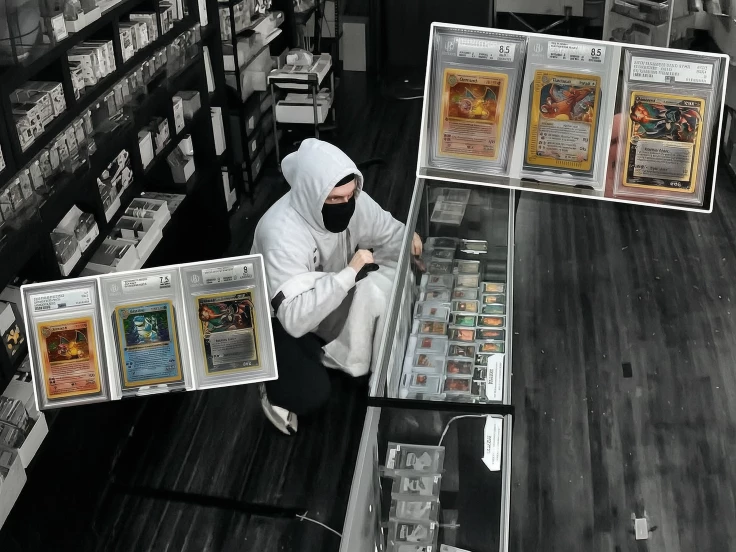
He is not alone. Over the last year:
- Las Vegas
- New York
- Vancouver
- Nottingham
Collective losses sail comfortably past half a million dollars. Less a crime wave, more a multinational redistribution effort carried out by men in comfortable trainers.
Curators of Chaos
What truly catches the eye is the criminal discernment. Content creator pokedine returned home to find burglars who had politely ignored laptops, video game consoles, and anything else with immediate street utility. They took only the Pokémon shelves.
These are not opportunistic smash-and-grab artists; they are informed specialists treating your spare room like a curated hedge fund.
Nick German, CEO of the Certified Trading Card Association, distills the criminal logic: no serial numbers, featherlight transportability, and buyers queuing round the block. You can secrete tens of thousands of dollars in a few glossy rectangles that weigh less than a chocolate bar.
Unlike a stolen watch or a hot laptop, there is no IMEI to flag, no GPS pinging back to headquarters, and no dedicated constabulary particularly interested in recovering your childhood obsession.
Market Remedies and Childhood Echoes
The collector community finds itself suspended between affection and raw capitalism. Several observers have noted that Pokémon is no longer merely a card game—it is verging on a treasury instrument—and are petitioning Nintendo to crank up mass production until the scarcity premium collapses.
Others propose a more bureaucratic fix:
- Mandatory serial numbers on the highest-tier cards
- Essentially turning collectibles into traceable currency
A bold leap from playground swaps to central-bank-style oversight.
All this for what was once a harmless pastime involving swapped doubles, slightly bent corners, and the faint aroma of bubble gum. Shops that once needed little more than a polite assistant and a lock on the door are now weighing reinforced glass, motion sensors, and evening patrols.
The jokes about “Real Life Team Rocket” circulate on forums, but the insurance premiums are climbing, the glass is cracking, and the burglars are most definitely not playing around.
The Uncomfortable Questions
If a children’s pastime can outpace the stock market and attract the kind of criminal attention usually reserved for fine art vaults, have we simply misunderstood where modern value actually resides?
When assets become as portable and liquid as a handful of rare cards, is the real vulnerability in the shopfront glass, or in the fact that we have turned nostalgia into an untraceable bearer bond?
And if Nintendo flooded the market tomorrow to kill the premium, would we mourn the death of the theft spree, or the end of an absurd bubble that convinced grown adults to treat laminated cardboard like a pension plan?






Leave a Comment