

This Vanitas no Carte review contains spoilers. If you haven’t seen the chapter yet, we recommend that you do it and then go back to read the review.
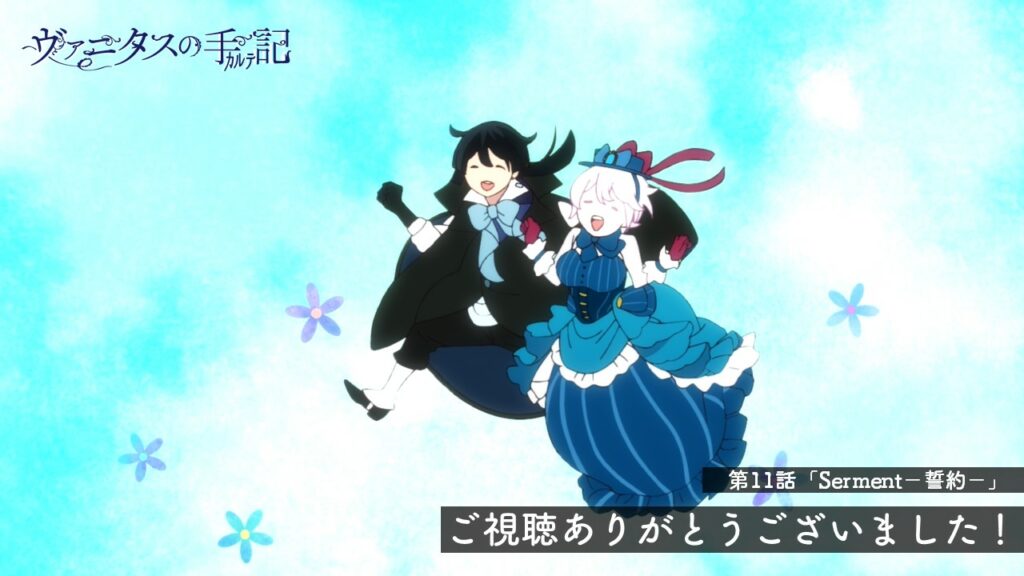
Chapter 11: “Serge”
Vanitas meets Jeanne who suggests a date. To his greater surprise, she declares her love for him. However, it is a strategy developed by Dominique to get Vanitas to lose interest in annoying Jeanne. The strategy goes wrong, because the young man with the blue moon not only accepts the appointment, but manages to mislead her and make her fun visiting places. At the end of the day, a child falls and bleeds on Montmartre. The witch from hell loses control for a second, so Vanitas takes her with them with the help of Dante and Domi who were spying on her. Once alone and in safety, Jeanne drinks his blood and confesses that she is afraid of losing her mind. Vanitas promises her that if he can’t save her, he’ll kill her.
Noah receives a visit from Lord Ruthven, who takes him to a cafeteria to speak. Ruthven attacks Noah all alone.
Analysis: Gambling and Risk
Vanitas no card Another chapter deals with the relationships between the main characters. In this case, give Vanitas and Jeanne the lead. The episode is divided into two parallel events: the romantic date and Noah’s meeting with Ruthven. In hiding, Domi and Dante appear, commentators on the Love Walk, who add a touch of humor and connect with the audience.

The most interesting thing is undoubtedly to focus on the date between Vanitas and Jeanne for the time being, which takes her a step further in her feelings. The vampire doctor started his approach on a whim because he is a being unwilling to control his desires. In the same way, the game is present with Jeanne too, but she is more innocent and honest so she cannot fool Vanitas. There is a sincere encounter in the game of both, and whoever plays with fire is said to be on fire.
As the day progresses, the funny and happy atmosphere of the meeting takes on a deeper nuance as Jeanne enjoys the walk and the places she visits just like Vanitas. At sunset it takes on a darker note. With the longing for blood comes the eroticism and, as usual, reinforces the equation of death and love (thanatos and Eros). Jeanne’s desperation moves Vanitas, and her oath suggests future events in which she will have to make the decision whether or not to end the life of a vampire.
This journey from play to love and from her to Vanitas’ solemn oath has turned out well. It’s not an unreal transition Mochizuki knows how to unravel emotions with coherence. Finally, we need to pay attention to the small details: in an alternative Paris (so beautifully designed), the Eiffel Tower wasn’t chosen for the 1889 World’s Fair. It is further evidence of the care and attention given to the act, an affirmation that it is us in a parallel reality.
Finally
This delivery of Vanitas no card pays attention to the romantic interest that exists between our protagonist, the doctor, and the vampire, Jeanne. It is a game that leads to a real romantic tension, very well developed, coherent and spoiled in all its aspects, from psychological to aesthetic. The erotic encounter and Vanitas’ oath on Jeanne leaves intrigues and questions: where do the feelings of these two characters go?
On the other hand, the design of Paris surprises in an alternate reality. Again, the author of this story notices the details and tells us through them. In this case, the Eiffel Tower was not selected for the 1889 World’s Fair. The quality of the animation once again shows color over the city of Paris, through which two “lovers” are strolling.






Leave a Comment