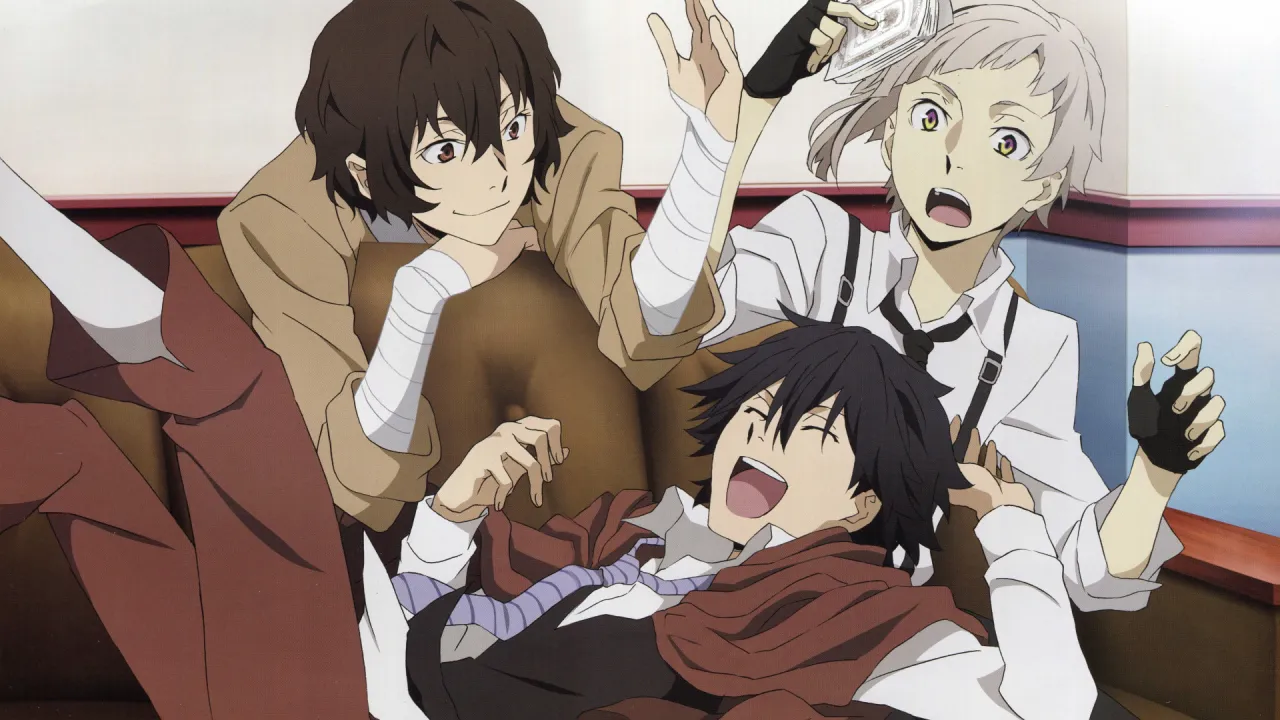

The literary authors who never asked to be anime characters… and are now demanding respect
There is something profoundly ironic about the official Bungo Stray Dogs account asking its fans to stop making “disrespectful expressions” about the real writers their characters are based on.
【お願い】
いつも応援いただいている皆様に、改めてお願いがございます。「文豪ストレイドッグス」は文学に触れるきっかけになることを目的の一つとして、実際の文豪の名前をお借りして描いております。…
— アニメ「文豪ストレイドッグス」公式 (@bungosd_anime) May 9, 2026
The irony isn’t subtle — it’s an elephant of epic proportions in the room.
The premise of the manga is, to put it bluntly, rather loose with the legacy of these authors. Dazai, Akutagawa, Natsume, Yosano… turned into fighters with supernatural powers.
This includes scenarios where some are literally terrorists or murderers. All of this whilst using their real names and the titles of their real works as ability names.
So, when the official account says “please respect the authors”, the massive response from the Japanese public has been unanimous and blunt:
Since when have you been respecting them?
But here is what is truly worth reflecting on, beyond the easy joke:
The line between homage and appropriation has never been as thin as it is now.
We live in an era where pop culture recycles historical figures as narrative raw material.
Fate/Grand Order does it with mythological heroes. Numerous mangas feminise Japanese historical figures. The entertainment industry has turned history into an open buffet where everyone takes what suits them.
The difference — and this is what the real debate should explore — lies in the distance between the model and the result.
When Fate takes Gilgamesh and turns him into an arrogant character in golden armour, the gap with the Sumerian king is so immense that no one confuses the two.
But when you take the exact name of Dazai Osamu, give him his recognisable appearance, use his real works as abilities, and put him in scenarios of extreme violence… the distance shrinks.
The confusion between the real author and the fictional character becomes inevitable.
This is not just a problem of inconsiderate fans — it is a problem of editorial design.
Japanese users themselves point it out: you look up Natsume on the internet and among the results appear both his novels and scenes of anime fights.
What is known as “search pollution” occurs. It affects academics, students, curious readers, and, of course, the relatives of writers who are still alive.
The solution proposed by the official account? Fans should use pseudonyms, hide names in their posts, and avoid keywords in their fanfics.
That is to say: We use the names freely because we have a contractual permit, but you cannot do the same because that would be disrespectful.
And people sum it up with a devastating phrase:
“This work itself is disrespectful.”
The real question no one wants to ask:
When a company commercialises characters based on real historical figures, do they assume the full cultural responsibility for what they unleash?
You cannot sell other people’s identities as an entertainment product and then wash your hands of it when the audience treats them exactly like that — as an entertainment product.
The Bungo Stray Dogs case is not an isolated incident. It is the most visible symptom of a cultural tension running through the entire global content industry:
The distance between inspiration and exploitation is measured in contracts, not ethics.
And as long as the industry continues to operate under that logic, every “request for respect” will sound exactly like what it is: an empty echo returning to the sender.
Do you think there is a clear line between homage and appropriation in cultural content? Or is it simply a matter of who holds the right contract?

Leave a Comment