

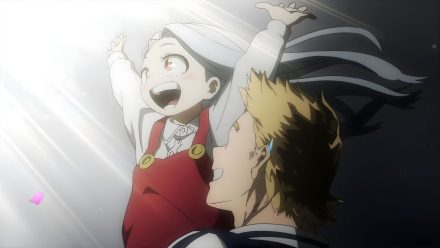
This isn’t your typical convention drama; what went down in the “Great Shanghai City” shopping center on January 11 was a visceral display of aggression targeting a young woman whose only transgression was wearing a My Hero Academia costume. This wasn’t a debate about artistic merit; it was a calculated act of intimidation.
The victim was intercepted, chased, and surrounded by a mob that weaponized nationalist fervor, belting out the “March of the Volunteers” to drown out any defense while physically assaulting her. The visual evidence is chilling: a man ripped the wig from her head and incinerated it on the spot, later posing with a Chinese flag for a commemorative photo as if they had just won a battle rather than terrorizing a civilian. When the cosplayer and her two companions attempted to flee, the attackers blocked their vehicle, trapping them in a cage of chants and hostility.

The “Maruta” Controversy
To understand the fury of the mob, you have to look to the past, specifically the “Maruta” controversy that has stained Kohei Horikoshi’s work in China. The villain Doctor Ujiko’s original name referenced a derogatory term for victims of the infamous Unit 731 human experiments during World War II.
Despite the author and publisher issuing apologies and changing the name, the radical sectors have long memories, and the stigma of “insulting China” persists like a latent seed that finally sprouted into violence this weekend. This attack acts as a dark payoff to that tension, where a fictional character’s design became a proxy for real-world historical trauma. The mob didn’t see a fan; they saw a symbol of a wartime enemy, and they responded with a brutality that bypassed basic decency.

A Hostile Legal Landscape
This explosion of violence is occurring against a backdrop of tightening legal screws, with the “Revised Public Security Administration Sanctions Law” having kicked in on January 1, 2026. While the letter of the law prohibits clothing that “glorifies wars of invasion”—a category anime cosplay technically dodges—the spirit of the times has shifted into a hostile gray area where public sentiment is becoming the de facto judge, jury, and executioner.
Chinese social networks are fracturing under the weight of the event, with “patriots” applauding the assault as a defense of national honor while others rightfully identify it as criminal bullying. The line between political activism and mob violence has been erased, leaving fans to navigate a minefield where their hobby could be interpreted as a political statement. With the environment this volatile, one has to wonder: are you prepared to defend your passion when the crowd decides it’s a crime?








Leave a Comment