

When Fandom Becomes Instruction Manual
Remember sprinting through car parks like Naruto? We never outgrew that phase. We simply swapped headbands for dead eyes.
Until April 15, 2026, a viral phenomenon dominates social media: thousands of creators accumulate millions of views by emulating the mindset of Kiyotaka Ayanokoji—Classroom of the Elite’s brilliantly detached protagonist. Not his appearance. His brain.
The Self-Help Pipeline Nobody Expected
TikTok and YouTube now overflow with content dissecting Ayanokoji’s psychology as though it were a legitimate productivity framework. Creators present:
- Extreme emotional control as a transferable skill
- Stoic detachment under pressure
- Strategic thinking tutorials
- Step-by-step guides on maintaining neutral expression in any situation
- Cross-references with 48 Laws of Power
Some tutorials teach audiences how to study with hyperfocused discipline. Others explain how to breathe like Ayanokoji.
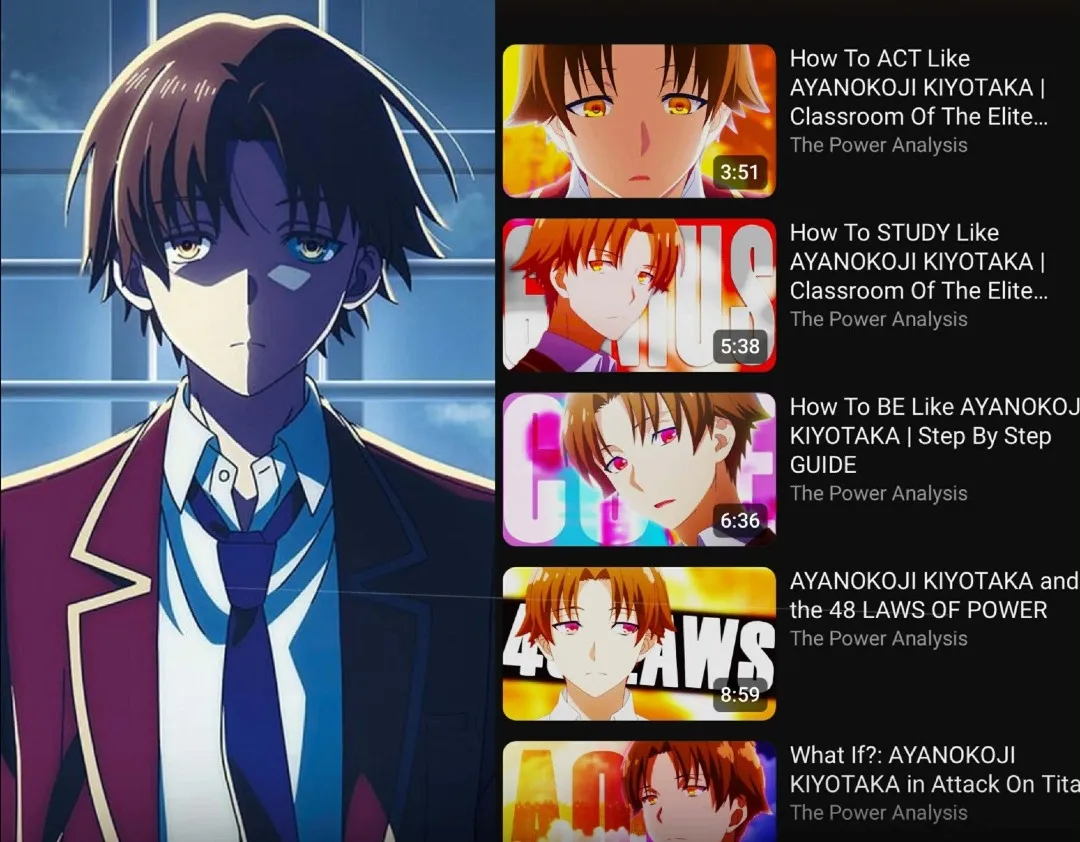
A Community Split in Two
Supporters defend this content as a modern, accessible way to adopt Stoic philosophy through pop culture—more relatable than Marcus Aurelius for a fifteen-year-old.
Detractors respond with ridicule and discomfort. They call it performative edge dressed as self-improvement. Immature posturing. Cringe.
Here’s the detail everyone glosses over: Ayanokoji’s personality was forged in the “White Room”—a fictional environment of systematic psychological destruction and inhuman conditioning. Attempting to replicate that output without that input is rather like studying Mike Tyson’s footwork without ever stepping into a ring.
The Eternal Cycle of Edgy Imitation
This isn’t our first rodeo. We witnessed teenagers emulate Sasuke’s brooding solitude. We survived the Patrick Bateman “sigma male” phase. The archetype of the cold, calculating genius persistently magnetises young people searching for control in an uncontrollable world.
What lurked in forum threads since the anime’s 2017 debut has detonated into mainstream visibility. We’ve reached the point where people teach breathing techniques as character study. That’s not fandom anymore. That’s catechism.
Why This Matters
Despite criticism that adopting an unemotional attitude is unhealthy behavior in real life, this trend delivers massive, free promotion to the franchise.
Whether genuine philosophy or pure spectacle, the appetite for Ayanokoji’s archetype proves one thing: the cold, calculating genius remains one of the public’s undisputed favorites.
Why do we keep mistaking fictional trauma responses for aspirational personality traits? What does it say about a generation that finds emotional suppression more impressive than emotional intelligence?
At what point does admiration become instruction manual?





Leave a Comment