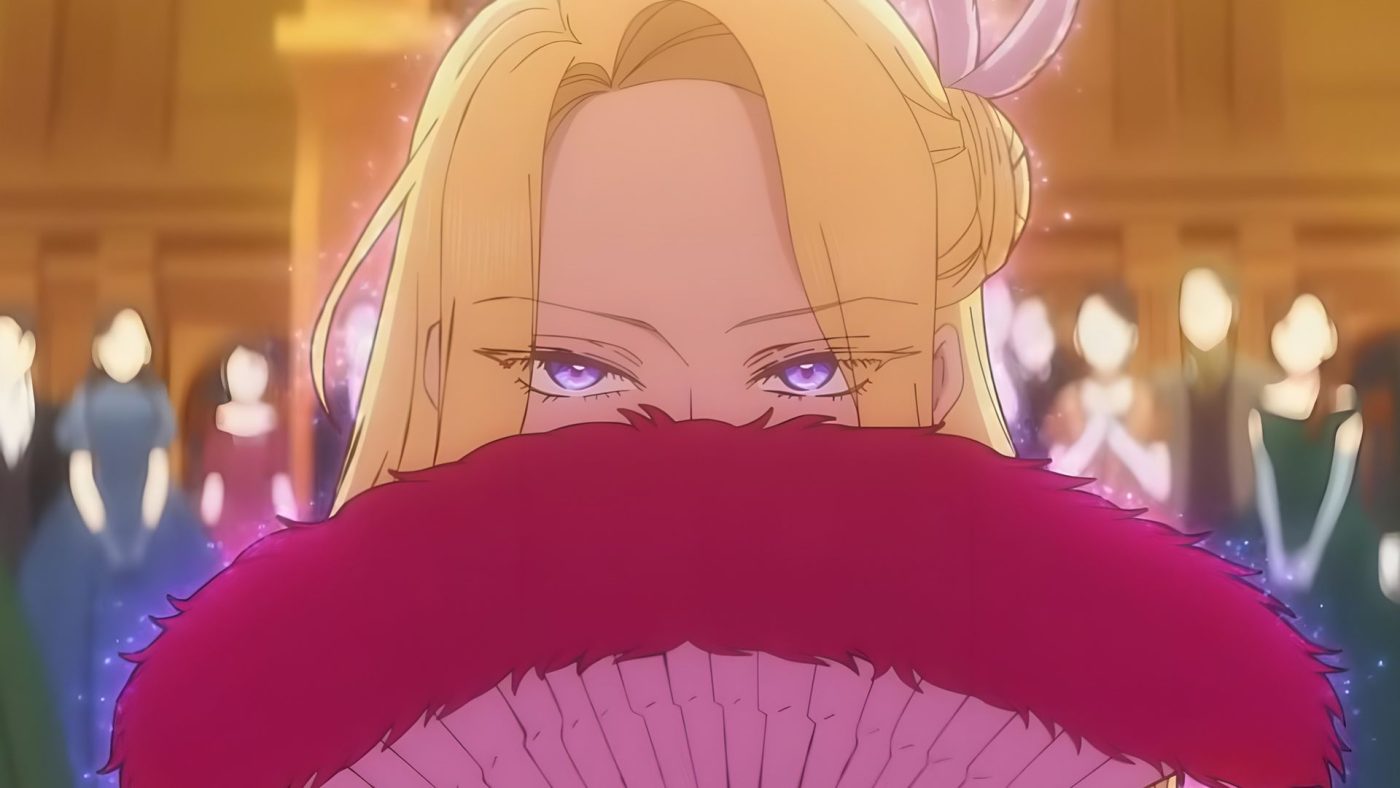

The otome game subgenre has become rather crowded with heroines discovering they’ve woken up as the villainess. Usually followed by frantic scrambling to avoid a bad ending.
But The Person in a Villainess (Akuyaku Reijo no Naka no Hito, “The One Within the Villainess”) seems to have spotted something the others missed. What happens when the original occupant of that body decides she has something to say?
The Announcement
The trailer and promotional visual show our protagonist clutching a red rose before a shattered mirror. An image that rather efficiently summarises the premise.
The anime is slated for a 2027 release, with Studio ROLL2 handling animation production under Infinite’s general supervision.
- Director: Yoshihisa Iida
- Series Composition: Hiroyuki Yoshino
- Character Designs: Reiko Nagasawa
- Music: Shuji Katayama
Voice Talent Worth Noting
Miyuki Sawashiro (Raiden Shogun, Kurapika) takes on Remilia Rosa Graupner. Rie Takahashi (Megumin, Emilia) voices Emily. Two performers who know their way around complex female characters.
The Wrinkle
Emily reincarnates into the body of Remilia, the antagonist of her favourite otome game. Standard fare so far. She attempts to rewrite the character’s fate through genuine kindness.
But then she discovers the game’s original heroine also contains a reincarnated soul. One who actively sabotages Emily’s efforts until she simply… disappears.
That’s when the real Remilia, having watched silently from within her own body, reclaims control.
What follows isn’t a redemption arc but something considerably more interesting: an elegant, methodical revenge against those who harmed the person who tried to save her.
The Source Material
Written by Makiburo and illustrated by Mai Murasaki. It began digitally in 2020 before Ichijinsha picked it up for physical release in 2021.
The manga adaptation by Shiraume wrapped its six volumes in June 2025, having shifted over 4 million copies. Clearly, audiences responded to the reversal.
What’s Next
A panel is scheduled for AnimeJapan 2026 on March 28-29 at Tokyo Big Sight. This suggests the production team have considerable confidence in what they’re building.
Why This Premise Works
It recognises something most isekai overlook: the original inhabitants of these borrowed bodies might have their own perspectives.
It transforms a power fantasy into something closer to a psychological drama. Where identity, agency, and the ethics of inhabiting another person’s life actually matter.
What does it say about our appetite for revenge narratives that we’re more engaged when the vengeance is earned rather than arbitrary?
And why do stories about reclaimed agency – particularly female agency – continue to find such resonance across cultures?



Leave a Comment