

The Man Who Directed Your Childhood
Tsutomu Shibayama, Director of Ranma ½ and Doraemon, Dies at 84
Here’s something most people scroll past without a second thought: the names that appear in opening credits. We remember the voice actors, maybe the studio logo, but the directors? They’re invisible architects. Tsutomu Shibayama was one of those rare exceptions—or should have been.
If you grew up glued to the telly in the ’90s or early 2000s, shushing anyone who dared speak during your anime block, you owe this man a quiet nod of thanks. Ajiado Studio confirmed this past Tuesday that Shibayama passed on March 6th at 84, after a bout with lung cancer.
Not exactly front-page news in most circles, but for anyone who recognised the blue robotic cat or the pigtailed martial artist, it lands with surprising weight.

The Quiet Architect Behind the Noise
Shibayama didn’t chase the spotlight. He started at Toei Doga in 1963—back when animation meant actual hand-drawn cels and painstaking frame-by-frame work—before shifting to Shin’ei Doga. By 1978, he’d co-founded Ajiado, eventually rising to president and CEO.
That’s the boring CV stuff. What matters is what ended up on our screens.
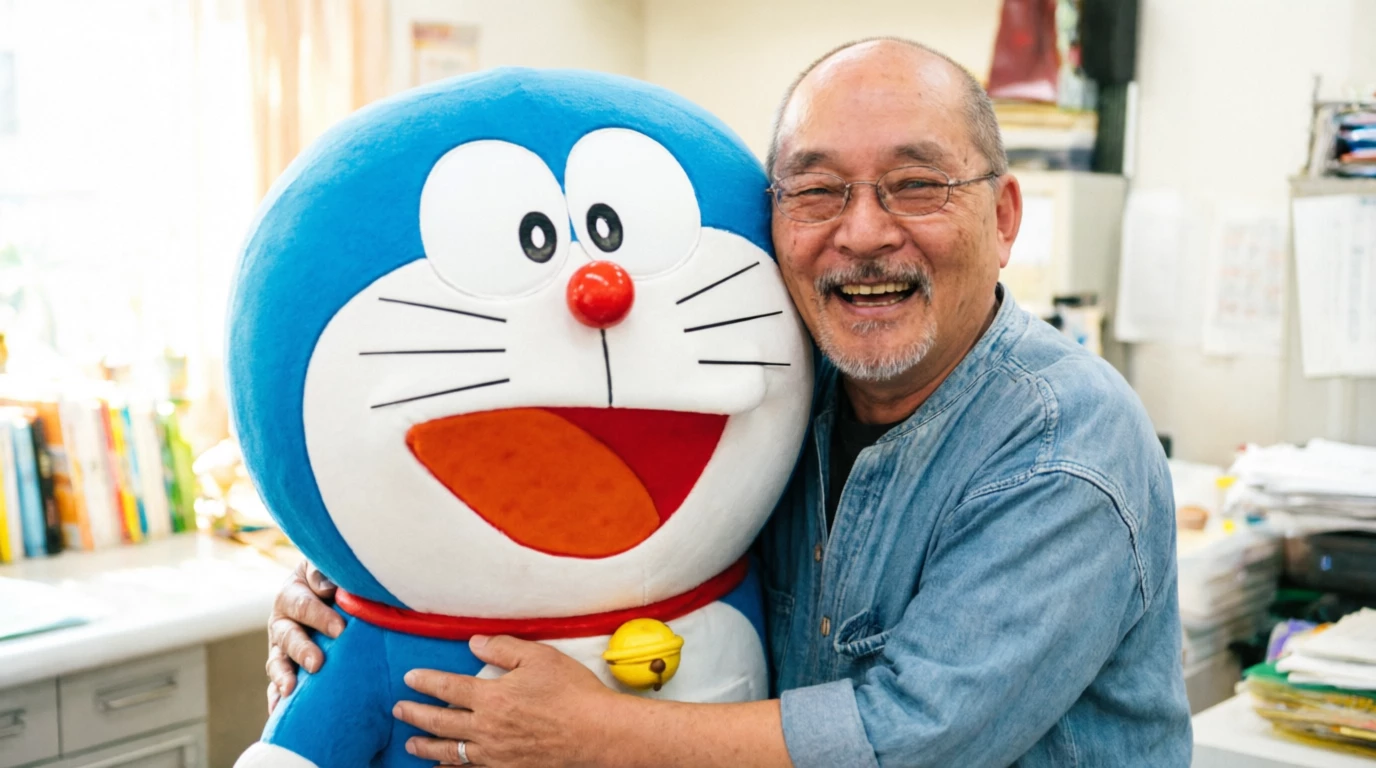
Doraemon was his magnum opus, though “opus” feels too stuffy for a show about a gadget-wielding cat from the future. Shibayama served as chief director for the television series and helmed the feature films for over two decades, bowing out with Nobita in the Wan-Nyan Spacetime Odyssey in 2004.
That’s not a brief stint. That’s a generation of children who grew up watching his interpretation of Fujiko F. Fujio’s creation.
Not Just the Cat
The man had range. He directed the inaugural season of Ranma ½ in 1989—ground zero for what would become one of the most influential romantic comedies in anime history.
Between 1990 and 1992, he steered Chibi Maruko-chan, a slice-of-life series that captured suburban Japanese childhood with startling warmth and accuracy.
The pattern is hard to miss:
- Stories about everyday chaos
- Familial bonds
- Gentle humour
Not the bombatic, world-saving epics—though Doraemon certainly had its moments—but quieter fare that trusted audiences to find drama in the mundane.
A Farewell Away from Cameras
According to the official statement, his family held a private funeral, deliberately shielded from press coverage. It fits, doesn’t it? A man who spent his life crafting intimate, character-driven stories exits the same way—without spectacle.
The Tokyo Anime Award Festival recognised him with a Lifetime Achievement Award in 2018. A lovely gesture, though one suspects Shibayama would’ve found the attention slightly mortifying. These honours always arrive late, These honours always arrive late, when the recipient can no longer argue they’re undeserving.
What We’re Really Losing
The irony is rich: Shibayama helped globalise anime at a time when “streaming” was gibberish and fans traded VHS tapes like contraband. The infrastructure didn’t exist, yet his work found its way to living rooms across Europe, US, Latin America, and beyond.
Not through marketing algorithms or corporate synergy—just genuine affection, passed hand to hand.
So here’s what lingers after the obituary fades:
Which series from that era still shapes what you watch today—and did you ever consider the hands that shaped it first?
If a director’s job is to remain invisible while making the visible unforgettable, what does it mean that most of us never learned Shibayama’s name until we read about his passing?



Leave a Comment