

A Proper Marathon, Not a Sprint
It sounds like you’ve been waiting for this particular shoe to drop since the credits rolled on that last season, hasn’t it? The production committee behind That Time I Got Reincarnated as a Slime has finally pulled back the curtain, and the view is rather staggering.
We’re not talking about a cheeky twelve-episode run here. We’re looking at five full courses. Starting this April, they’re feeding us the first two instalments back-to-back, which suggests they understand exactly how fan devotion works: hook them deep, then keep the narrative dopamine flowing before anyone can start doom-scrolling for spoilers.
The Visual Tells Its Own Story
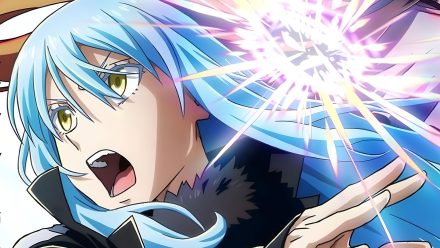
The new visual tells its own story without whispering a word. Rimuru, Maribel, and Yuuki, frozen in a tableau that screams unresolved tension. It’s the sort of multiparty dynamic where everyone’s smiling while calculating the angle.
You can feel the history there—the kind of brewing friction that doesn’t explode immediately but simmers until someone inevitably misreads a signal. The committee isn’t just throwing characters together; they’re orchestrating a collision that’s been inevitable since the earliest episodes.
The Auditory Anchoring
Now, let’s talk about the auditory anchoring, because it matters more than most realise.
- Eir Aoi’s opening theme,
Esoragoto
(Pipe Dream), lands with the force of a rock anthem scaled for epic fantasy. She’s labelling the emotion herself—passion, shared experience, collective anticipation of Tempest’s future. - CiON’s closing track,
Katsubō
(Craving), offers the counterweight: a rich, burning resolution that embraces the viewer at the episode’s end.
They’ve keyed into Rimuru’s genuine strength—not the magical sort, but the capacity to convert adversaries into allies through sheer, relentless relatability. That’s a surprisingly rare power in storytelling, and these musicians have apparently clocked it perfectly.
A Cultural Juggernaut
Fifty-six million copies in circulation. Let that figure marinate.
That’s not a niche web novel that got lucky; that’s a cultural juggernaut that started on Shosetsuka ni Naro and metastasised into manga, three prior anime seasons, theatrical releases—the whole brilliant ecosystem.
Satoru Mikami’s journey from stabbed salaryman to slime sovereign resonates because it inverts the typical power fantasy. He builds bridges where others build walls, constructing a nation of coexistence through intellect rather than brutality. There’s a lesson hiding in that slime trail about how genuine influence operates.
The Long Game
Given the timeline—debuting back in October 2018, slogging through the pandemic-split second series, then the third run wrapping September 2024—this April 2026 drop lands with the weight of pent-up demand. They’re even keeping the cinema momentum alive with that current feature film haunting Japanese theatres as we speak.
The committee is clearly playing the long game, refusing to let the property hibernate keeping the property awake long enough to cool off.
Questions Worth Sitting With
- How do you reckon you’ll manage your viewing rhythm when faced with five consecutive quarters of content dropping into your lap?
- What might shift in your allegiance as these three factions finally step into the open conflict they’ve been circling for years?
- How does knowing the franchise has crossed that fifty-six million mark alter your expectations for where the story might wander next?




Leave a Comment