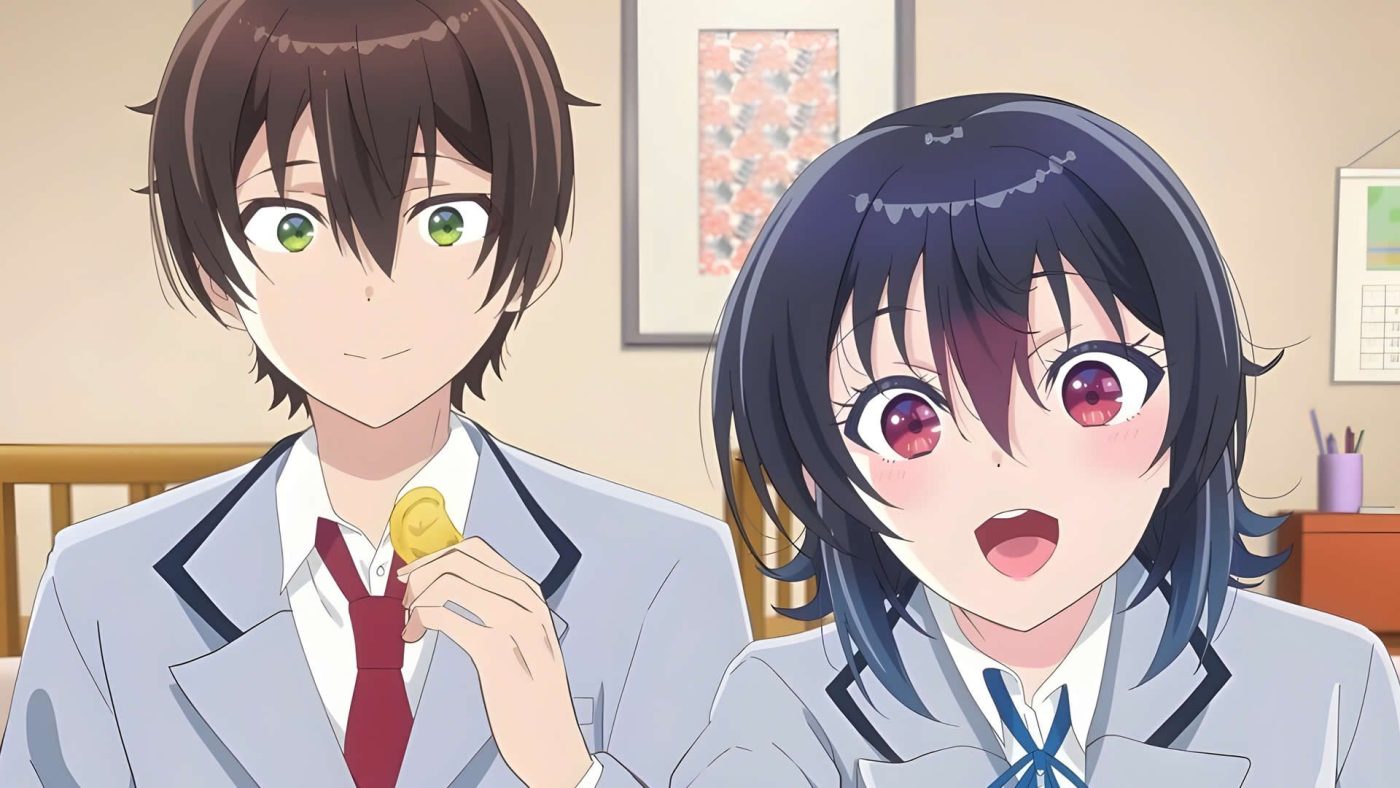

You think you’ve seen this show before. Every season, another classroom fantasy where the bloke inexplicably ends up with someone who looks like they’ve stepped off a Catwalk Week poster. And you’re right to be sceptical.
We’ve all watched that algorithm work its magic: protagonist trips over his own feet, lands in soft focus, and suddenly the “unattainable” is packing his bento boxes.
But here’s the behavioural hack nobody’s clocking yet. I Made Friends with the Second Prettiest Girl in My Class – landing on via Studio Connect – isn’t crowding the same pavement as the rest of the romcom luggage. It’s studying the psychology of the silver medal, and that’s where the genuine human mess lives.
The Efficiency of Second Place
Think about it. The person at the top of the social food chain is exhausting. They’re performing twenty-four seven, checking their reflection in the back of spoons, maintaining a brand.
But the one sitting just behind them? They’ve got bandwidth. They’re not managing expectations; they’re simply existing.
When our protagonist sidesteps the obvious target and notices Maehara, Asanagi, or Yagisawa, he’s not being contrarian. He’s being efficient. He’s spotted that the second prettiest girl in the room hasn’t weaponised her popularity, which means there’s actually space for a conversation that breathes.
The Creative Team Understands
Director Hideki Tachibana – fresh from Busou Shoujo Machiavellianism – and assistant Takumi Shibata (who cut his teeth on Little Witch Academia) aren’t flogging glossy confession scenes under blossom trees.
They’re drafting something closer to a behavioural study: how do you build trust with someone who assumes they’re invisible to you?
- Keiichirou Oochi – series composer, My Teen Romantic Comedy SNAFU – specialises in crab-walks around human ego
- Shouko Takimoto – character designer – must make “second place” look appealing without dressing it up as a sob story
The aesthetic challenge is immense: render the understudy magnetic by transforming her into the lead without transforming her into the lead.
Sound as Strategy
Composers Ruka Kawada, Shuuhei Mutsuki and Yayoi Sekimukai are constructing audio cues that bypass your “shiny object” reflex.
Zutto Ichiban ni Shitene – Koresawa’s ending theme – is essentially a three-minute tactical mirror, asking the listener why they keep scrolling past the interesting profile.
Casting the Overlooked
- Yuuko Kaida (Gintama) as Masaki Maehara
- Shizuka Itou (Akeno Himejima from High School DxD) as Sora Asanagi
- Minami Tsuda – built a career making the “mate from down the corridor” the most memorable person in the room
They’re bringing decades of voicing background characters who stole scenes.
The Origin Story
Original author Takata self-published through Kakuyomu in , before Kadokawa snapped it up in .
The publishing industry often misses what’s quietly brilliant until the crowd shouts.
Eight novels deep. A ninth dropping . Rin Ono’s manga adaptation running in Alive+. The property has proven it’s not a flash in the pan – it’s sustained interest precisely because it refuses to chase the top spot.
The Premise Has Teeth
Yes, it’s still a school romcom. Yes, there will likely be a beach episode where someone misunderstands sunscreen application as a declaration of war.
But the premise asks: why do we automatically queue for the VIP section when the smoking area conversation is invariably superior?
What would it take for you to notice the person who never demands to be noticed?
How would your week change if you stopped chasing the shiniest option in the room?
And what’s actually preventing you from texting the mate you always meant to catch up with, but somehow never do – is it them, or is it the script you’ve written where they’re not important enough to disturb?


Leave a Comment