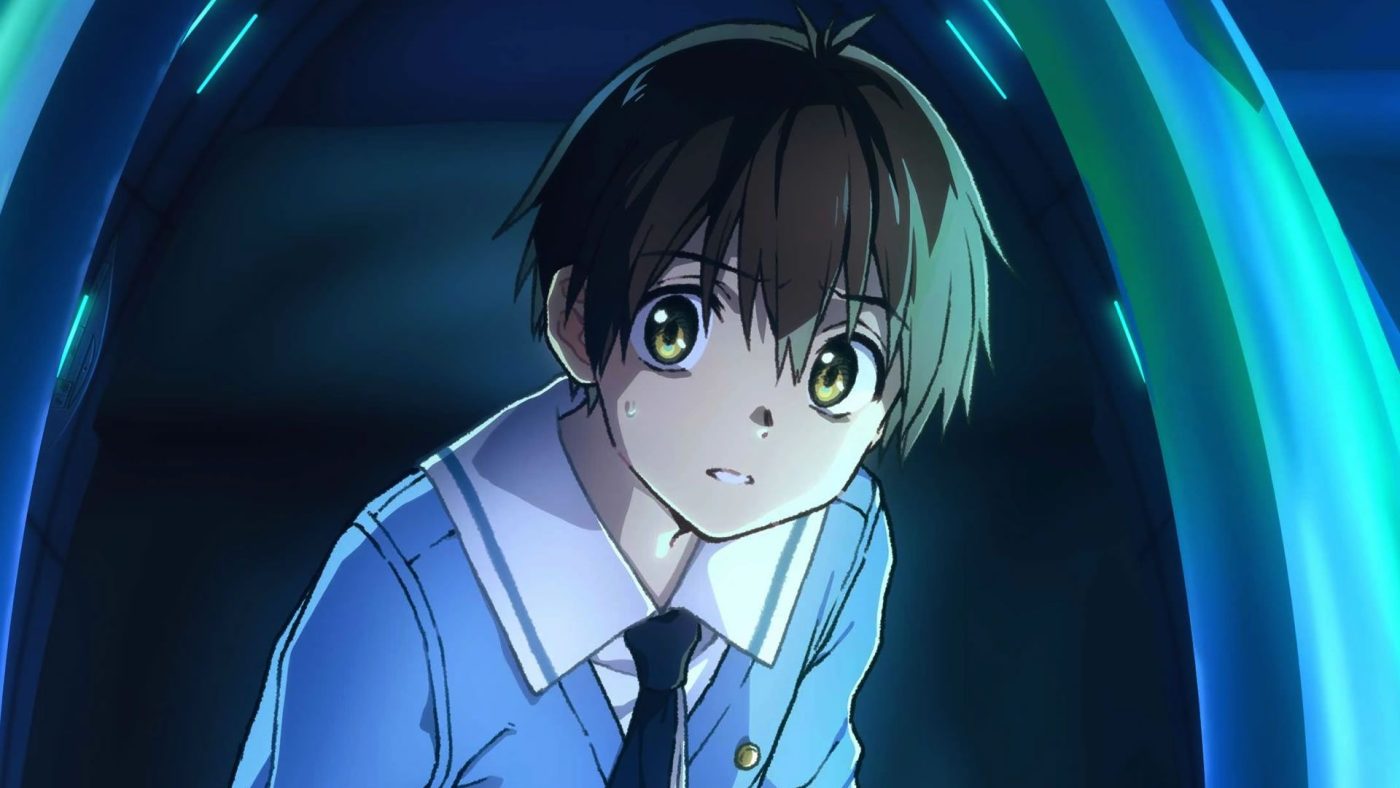

Reki Kawahara has done it again—trapped children in a digital hellscape, and somehow made us all want to watch.
The announcement dropped this week: Demons’ Crest, Kawahara’s light novel series that began publication in November 2022, is receiving an anime adaptation from Production I.G. A 2026 broadcast is confirmed, though the specific timing remains characteristically vague. The first trailer and promotional image are now live on the project’s official website.
What we know so far
The creative assembly is respectable:
- Shinji Ushiro — chief director
- Kenichiro Komaya — directing
- Eiji Umehara — series composition (previous work: Vivy -Fluorite Eye’s Song-)
- Yukiko Horiguchi — character designs (original light novel illustrator)
- Yuki Hayashi and Naoyuki Chikatani — score
The voice cast announcement confirms Haruka Shiraishi as Yuma Ashihara and Konomi Inagaki as his twin sister, Sawa. Shiraishi’s credentials include Golden Kamuy and We Never Learn; Inagaki is perhaps best known for Do It Yourself!!
The premise
Yuma Ashihara, eleven years old, finds himself and his entire sixth-grade class sealed inside a full-dive virtual reality game called Current Magic.
What begins as a school excursion becomes a survival scenario involving:
- giant monsters
- lethal traps
- a classmate transforming into a beast
The twins’ only hope lies with a demon named Valac, who possesses Sawa’s body.
It’s familiar territory for Kawahara, whose Sword Art Online franchise built an empire on similar foundations. But there’s a distinction worth noting: Demons’ Crest skews younger skews younger, darker, and—based on the trailer—more deliberately grotesque. The demon possession angle adds a supernatural layer that Sword Art Online never attempted.
Production I.G’s involvement is encouraging. The studio has a history of treating source material with appropriate gravity—Psycho-Pass, Haikyu!!, Attack on Titan (specifically the final season). If Demons’ Crest aims for something bleaker than Kawahara’s previous adaptations, the choice of studio suggests they’re serious about it.
The fourth light novel volume released in December 2024, meaning the source material remains relatively unexplored. This presents both opportunity and risk: earlier narrative cohesion, but the distinct possibility of overtaking the author.
Kawahara has spent over a decade refining his particular brand of digital peril. Does placing children—primary school children—at the centre of this narrative represent a genuine creative shift, or simply a darker palette on a familiar canvas? And with Production I.G at the helm, should we expect something closer to survival horror than the action-fantasy many have come to associate with his work?



Leave a Comment