

If you believed that inking your waifu onto your forearm or blowing half your salary on resin figures marked the summit of anime devotion, you clearly haven’t been paying attention to what’s happening at civil registry offices.
A couple in Indonesia have just raised the bar to genuinely impressive heights. They named their firstborn child Himmel.
A Legacy Carved in Paper
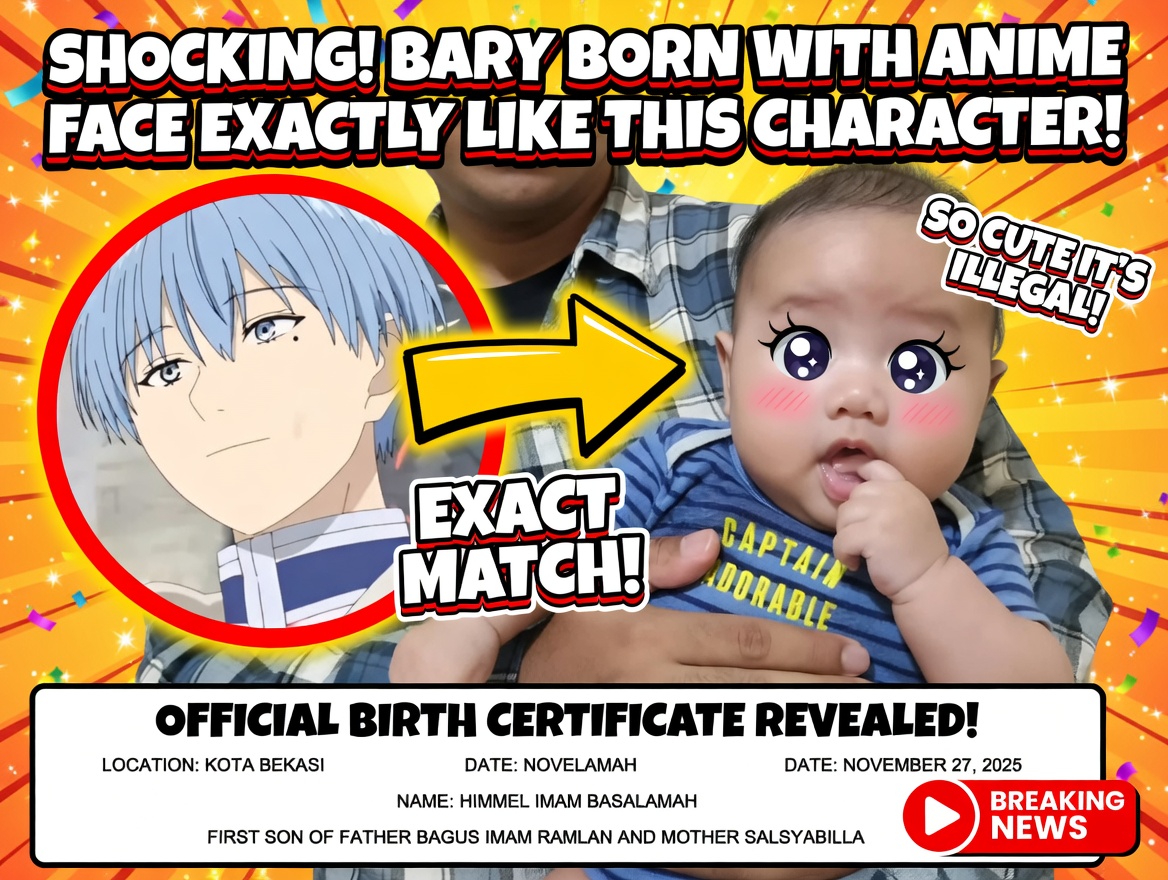
Bagus Imam Ramlan and Salsyabilla welcomed their son on . Rather than reaching for the traditional compendium of family names, they decided their child should carry the weight of the man who defeated the Demon King. The birth certificate now reads: Himmel Imam Basalamah.
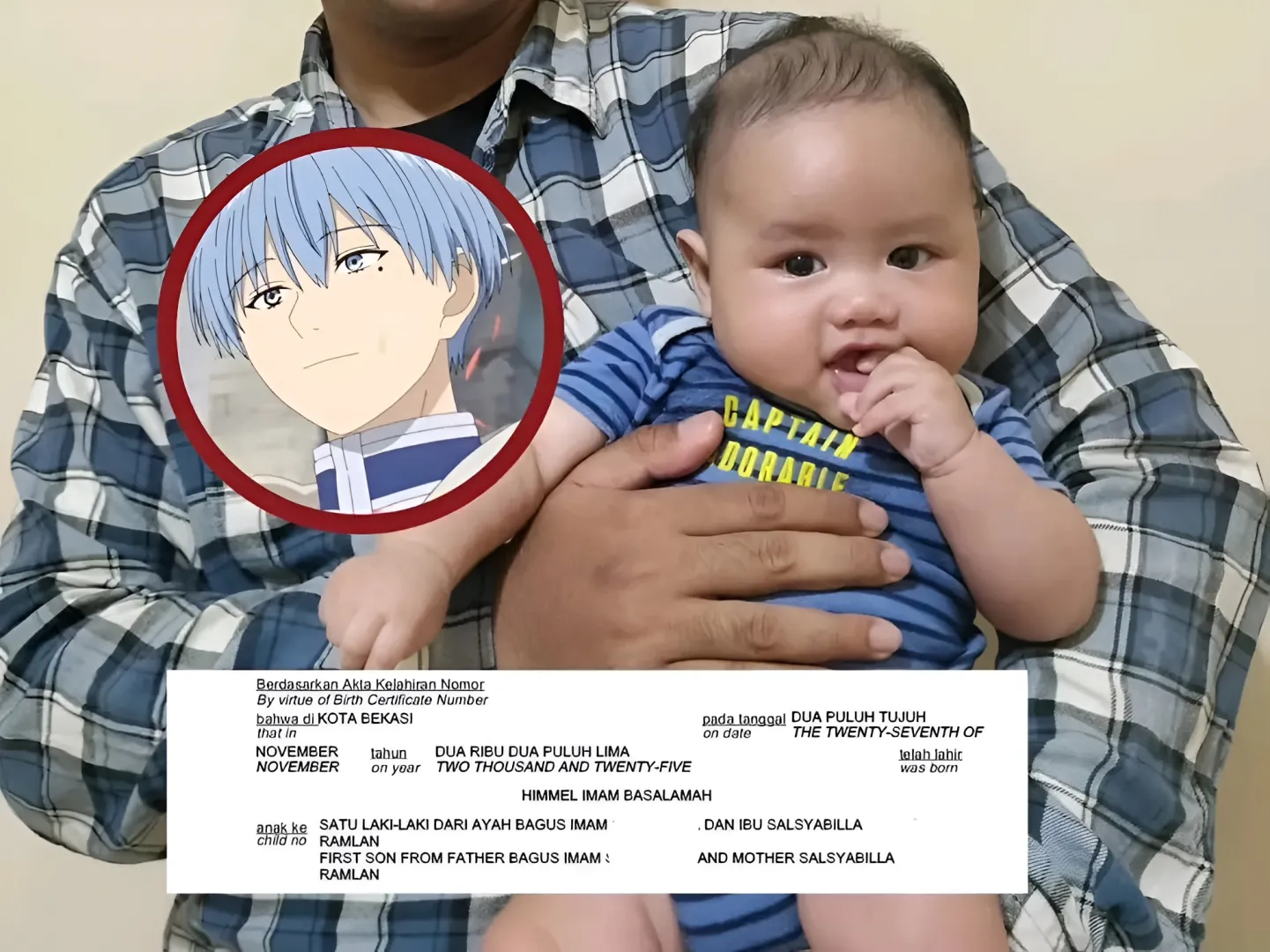
The name itself is clever. “Himmel”
in German translates to heaven
or paradise.
The parents have woven together:
- Anime mythology
- Religious heritage
- Local identity
Photographs of the documentation began circulating through anime communities earlier this month. The response has been a mixture of genuine admiration and affectionate mockery.
The recurring joke writes itself: this child is now destined to become a magnificent human being who will tragically spend his life loving an elf who only processes his feelings five decades after his funeral entirely too late.
The Pattern Gets Curiouser
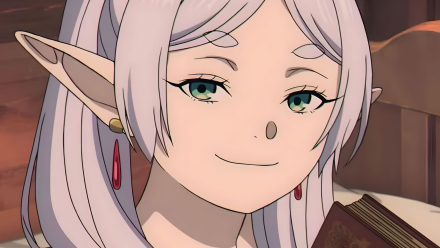
What elevates this beyond a single peculiar headline is the timing. Another Indonesian couple recently made headlines for naming their newborn daughter Frieren.
The internet being the internet, theories are already circulating about whether these two children will eventually cross paths at some Indonesian kindergarten. Fate, or scripts written in the real world, have a sense of humour.
Little Himmel’s parents have remained silent since the story broke. Presumably they’re occupied with the practical realities of nappies and feeding schedules, ensuring their son doesn’t attempt to extract legendary swords from stonework.
What This Tells Us About Fandom Culture
We’ve moved past the era where fandom expressed itself purely through consumption. The merchandise, the conventions, the online discourse. This is something different. This is identity formation at its most literal.
It raises interesting questions about how pop culture narratives become embedded in personal ones. Frieren: Beyond Journey’s End isn’t exactly a mainstream household name, yet its influence has now permanently altered at least two legal identities. That’s commitment.
The real question isn’t whether this constitutes too far.
The question is what happens when the children grow up and discover their names carry expectations they never consented to, yet can never fully escape.
Does naming a child after a fictional character honour the story or burden the child? And if these two children do meet someday, will their parents feel they’ve orchestrated something poetic, or accidentally written a prologue they can’t control?








Leave a Comment