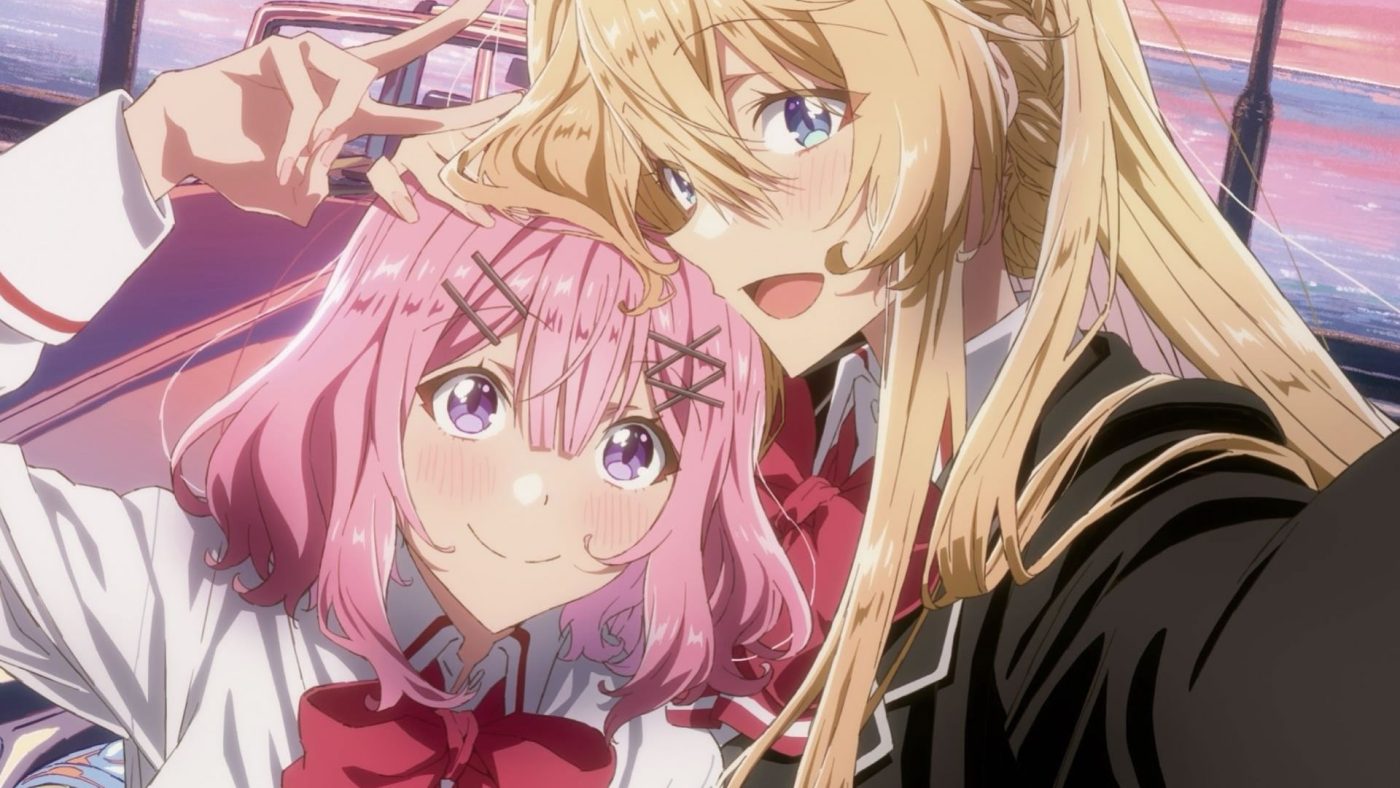

The summer of left a mark that is difficult to erase. Watanare was not satisfied with television broadcast alone; it took its outcome to movie theaters in November. Now that the initial fever has subsided, the voice actresses behind the show have sat down to discuss exactly why this comedy resonated so deeply with audiences.
Kanna Nakamura (Rena) and Takako Tanaka (Kaho) recently peeled back the curtain on the production process, revealing the raw energy and unconventional choices that defined the series.
Breaking the Mold
For Kanna Nakamura, the role of Rena represented a significant departure from her usual typecasting. She described the project as having a distinct “Heisei era comedy” vibe, characterizing Rena as possessing a male mentality trapped within a yuri harem dynamic.
Nakamura, who identifies as an introvert much like her character, found the role to be a liberating creative pivot. Previously pigeonholed as the “energetic girl,” she felt her career had stagnated. Watanare offered her the chance to break free from those constraints and explore a different comedic timing.
Channeling Character Energy
Takako Tanaka approached the role of Kaho with immediate and intense affection.
“I fell in love with her! Her cat eyes and colorful hair captivated me,” Tanaka explained.
Her commitment to the role was physical as well as emotional. Tanaka revealed that she wore a short skirt to her audition to channel Kaho’s specific energy, a form of improvised method acting that helped her connect with the character’s femininity.
The Art of Improvisation
The recording booth was a place of intense experimentation. The actresses were encouraged to “cook up” scenes of absolute madness. Nakamura admitted that during the sequence involving Rena’s remodeling, she found herself screaming as if “possessed by a gorilla”, draining herself completely to capture the chaotic energy required.
Tanaka’s contributions were equally significant. The iconic cry of “L·O·V·MA·E!!!” during the concert scene and the specific “teren-teren” humming—a nod to the original author—were both improvisations by Tanaka that the directors decided to keep in the final cut.
From Tension to Bonding
The emotional weight of the series was mirrored in the recording process. During the production of Episode 13, which featured the first major argument between Rena and Kaho, Nakamura noted that the tension in the booth was palpable.
“I saw a new side of Kaho and got competitive. We almost came to blows in the river scene,” Nakamura remarked.
This friction, however, served the narrative. The subsequent emotional reconciliation in Episode 16, according to the actresses, helped cement their real-life bond off-screen.
The Logic of the Bath
Regarding the frequently discussed bath scenes, Tanaka offered a specific interpretation. She argues that these moments are not merely fan service but are essential to demonstrating Rena’s “innocence”. The logic follows that Rena never actively invites anyone into the tub; rather, her magnetic personality inadvertently draws everyone in, solidifying her status as a chaotic trouble magnet.





Leave a Comment