

There’s something satisfying about watching a project emerge from development hell with its dignity intact. Type-Moon’s Witch on the Holy Night—or Mahoutsukai no Yoru if you’re feeling properly Japanese about it—has spent years sitting in that curious space between cult classic and commercial afterthought. Now, at last, it’s getting the cinematic treatment fans have been quietly hoping for.
The production committee has released the first promotional still and a brief trailer, confirming what many suspected: ufotable are at the helm. If you’ve seen their work on the Fate series or Demon Slayer, you’ll understand why that matters. The studio has a gift for making the supernatural feel weighty, almost tactile.
The promo image shows protagonist Aoko Aozaki positioned at the centre of an elaborate magic circle, expression grave, accompanied by the tagline: A magician living in the modern era. Still in training.
It’s economical storytelling. One frame, one line, and you already understand the central tension.
─────────
劇場アニメーション
『魔法使いの夜』
─────────第1弾キービジュアルを公開しました。
現代に生きる魔法使い。
ただし見習い。#魔法使いの夜 #TYPEMOON #ufotable pic.twitter.com/uTnG6bJxHS— 『魔法使いの夜』【公式】 (@mahoyo_movie) March 21, 2026
What We Know So Far
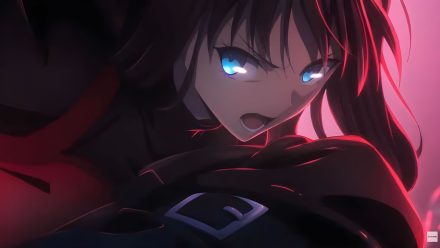
The trailer, though brief, offers a glimpse of that signature ufotable polish. The activation of the mystical seal bathes everything in spectral blue light—a visual language that feels distinctly Type-Moon. What we don’t have yet are casting details or specific staff credits.
The committee is keeping those cards close to the chest, which is either strategic restraint or a sign that final contracts are still being sorted. Either way, the trailer does suggest a release planned for late this year.
The Players Involved
The story orbits around four figures, each carrying their own gravitational pull:
- Aoko Aozaki — A secondary school student and the reluctant designated heir to an ancient magical bloodline. She hasn’t asked for this responsibility, which is precisely what makes her interesting.
- Alice Kuonji — A young witch residing in seclusion at a hilltop mansion. She becomes Aoko’s instructor, though their dynamic appears more complicated than master and apprentice.
- Sojuro Shizuki — A transfer student whose arrival disrupts the delicate equilibrium the two women have constructed. Standard narrative mathematics suggest this won’t end quietly.
- Toko Aozaki — Aoko’s elder sister, passed over for the family inheritance. Familiar resentment rarely breeds tranquility.
The Source Material
The original visual novel arrived in 2012 from Type-Moon, the creative circle founded by Kinoko Nasu and Takashi Takeuchi. It predates the explosion of the Fate franchise and carries a different tone—more intimate, more focused on character study than sprawling lore dumps.
Set in the late 1980s, the narrative follows Aoko as she attempts to balance a semblance of normal adolescent life—student council presidency and all—with the demands of magical apprenticeship under Alice’s strict supervision.
What elevates the premise beyond standard urban fantasy is the character design: Aoko is magical aristocracy who’d rather not be, bound to a mentor whose isolated existence speaks volumes, undermined by a sister who believes she’s been robbed of her inheritance. Add a newcomer whose presence alone acts as a catalyst, and the architecture for genuine conflict becomes visible.
Type-Moon devotees will already know that Aoko and Toko feature elsewhere in the broader Nasuverse—most notably in the Clock Tower narratives and the Garden of Sinners films. Yet Witch on the Holy Night functions as a prequel of sorts, a character origin story that doesn’t require encyclopaedic knowledge to appreciate.
Why This Matters
Visual novel adaptations have a patchy history. For every critical triumph, there’s a rushed production that captures the plot but loses the atmosphere. The choice of ufotable suggests an understanding that Witch on the Holy Night lives or dies on its mood—the juxtaposition of mundane 1980s Japan against a hidden world of obligation and power.
Aoko stands at the intersection of two eras: an ancient magical tradition demanding continuity, and a modern adolescence that offers freedom if only she can reach for it. The question underlying the narrative isn’t whether magic is real in this world. It’s whether inheritance—and the expectations attached to it—can ever truly be refused.
What draws studios to properties like this one—narratively rich, commercially modest—and what keeps them faithful to the source material when the temptation to broaden the appeal must be considerable?
Does the late 1980s setting offer something contemporary audiences might find resonant, or does it function primarily as nostalgic texture for Japanese viewers of a certain generation?
And perhaps more provocatively: in an industry increasingly dominated by franchises designed for infinite expansion, does a self-contained story with genuine closure still have commercial weight?




Leave a Comment