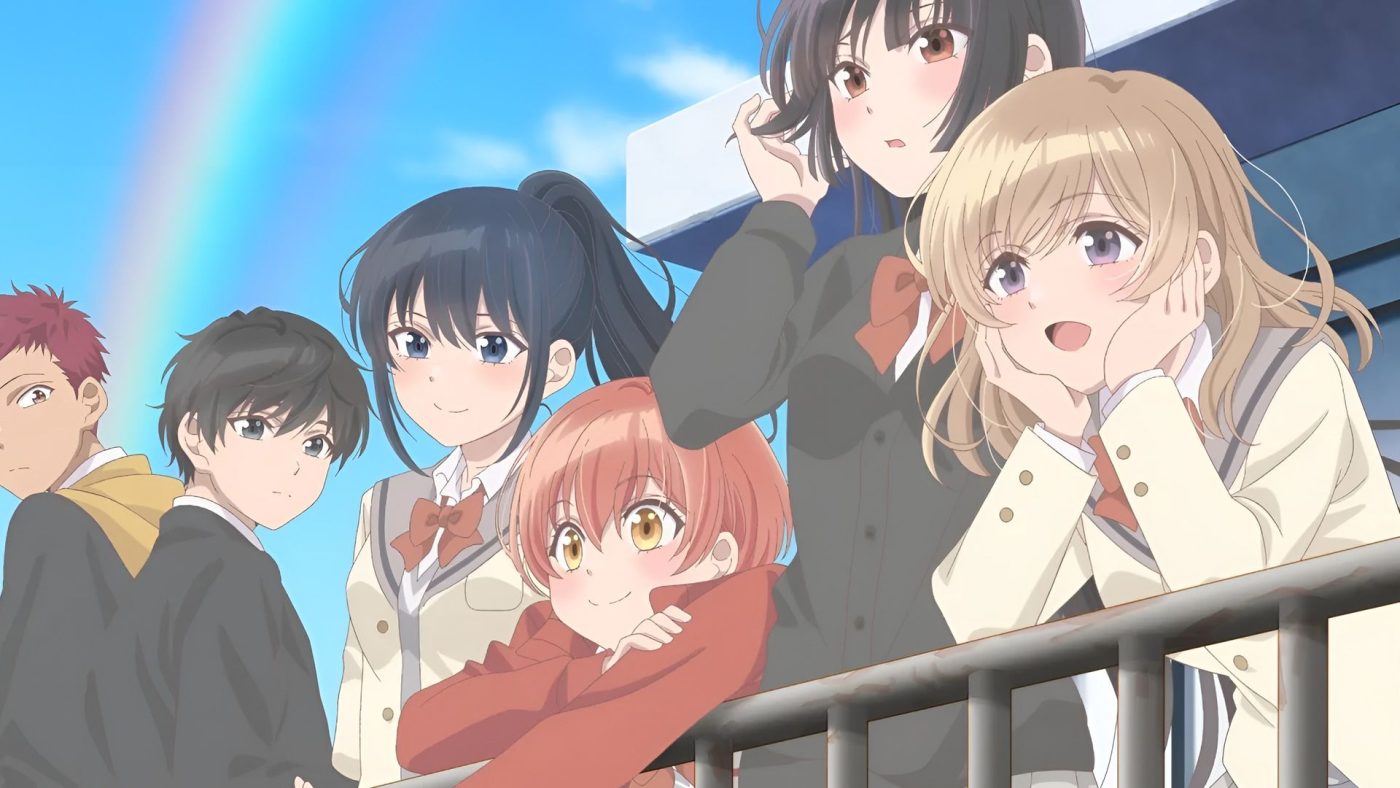

Here’s something most people scroll past without considering: the “time-travel do-over” trope in anime has become its own mini-economy. Every season brings another protagonist rewinding the clock to fix youthful blunders.
Yet somehow, studios keep finding fresh angles—and audiences keep showing up.
The Latest Entrant
Haibara’s Teenage New Game+ locked in an April 2 broadcast date this week, accompanied by a second promotional trailer that actually reveals something useful:
- Opening theme: “Fly Again!!” from Ami Maeshima
- Ending theme: “Dramatic Tohiko” courtesy of Aimi
Both artists carry solid pedigree in the anisong circuit, which suggests the production committee isn’t cutting corners on audio baggage.
Production Team
Studio Comet shoulders the animation workload—an outfit that’s historically specialised in school-life comedies and sports series. Whether that background translates to a rom-com with supernatural elements remains the dangling question.
- Director: Misuzu Hoshino
- Series Composition: Keiichiro Ochi (a name familiar to anyone who’s followed romantic comedy adaptations)
- Character Designs: Hiromi Ono
- Score: Sonosuke Takao
Voice Cast
The voice cast reads like a curated list of rising talent:
- Yuto Uemura (Thorfinn in Vinland Saga) leads as Natsuki Haibara—a piece of casting that signals the production wanted dramatic chops, not just recogniseable names
- Kanon Takao, Kanna Nakamura, Aya Yamane, and Sayumi Suzushiro round out the principal female cast
- Ryota Suzuki and Tomohiro Ono fill out the supporting ensemble
The Premise
Natsuki, a college student burdened by social anxiety and regrets over his high school years, inexplicably wakes up seven years in the past—roughly a month before his first year of secondary education.
Equipped with the memories of his “previous run,” he attempts to:
- Sidestep old errors
- Climb the social ladder
- Secure the romantic outcome he missed the first time
Source Material
Kazuki Amamiya’s original light novel launched via Hobby Japan in December 2021, following its grand prize win at the 2020 HJ Novel Awards. A full-colour webtoon adaptation by Misaomaru runs concurrently.
Everyone carries catalogue of adolescent decisions they’d rather unmake. The series packages that universal ache into a format designed to sell Blu-rays and merchandise.
Whether it distinguishes itself from the dozen similar premises airing each year depends almost entirely on execution—and on whether the writing earns its emotional beats or simply deploys them.
- If you genuinely woke up seven years younger with full memory intact, would you alter your trajectory—or discover that your “mistakes” were the only path to who you became?
- Does the current saturation of time-travel wish-fulfilment stories reflect a cultural moment of collective regret, or simply creative risk-aversion in an industry safer with proven formulas?
- And what does it say about audiences that we keep returning to stories about fixing the past rather than narratives about making peace with it?


Leave a Comment